Showing posts with label Vietnam. Show all posts

Monday, November 20, 2006

Meal #14 - Vietnam (Part 2)

Vietnam is best known for the 16 year war between America (and its allies) and communist North Vietnam (and allies). With the great food that Vietnam has to offer, it's no wonder that the Americans were recalcitrant to leave!
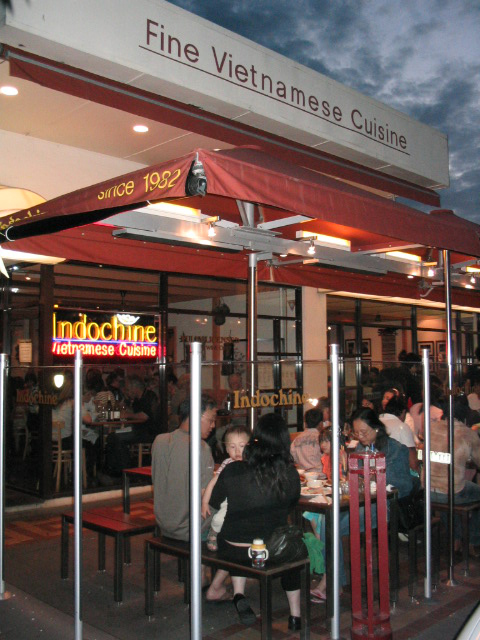
Indochine
Vietnamese Cuisine
51 Carrington Rd, Box Hill. 9890 2966
Open 7 days. Lunch 11am to 3pm; Dinner 5.30pm to 10pm
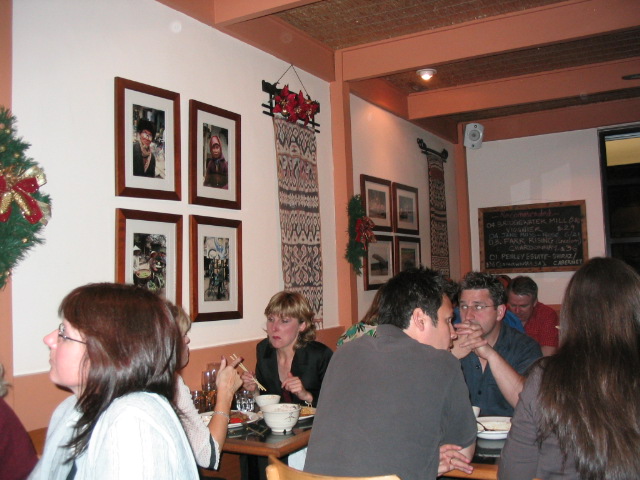

Located in Box Hill, Indochine is a popular restaurant certainly not lacking in customers. Frequented by many Vietnamese and non-Vietnamese patrons alike, the restaurant was a hive of constant, noisy activity. Due to the high number of diners, we were forced to make our booking for 90 minutes later than we had planned, and still had to wait for a table to become available! However the staff were pleasant and professional about the delay, efficiently and quickly clearing table space to accomodate our group.

The décor, general Western styling with the occasional Vietnamese artifact or picture (plus some very early Christmas decorations), left some feeling trepidacious that the food served might be overtly aimed at Western sensibilities. Thankfully the meal was first-rate and authentic.
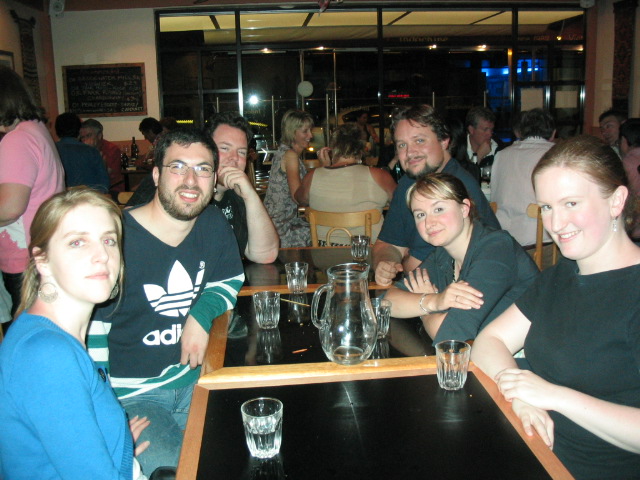

This week’s Viet Con (Vietnamese Connoisseurs) were Helen, Rami, Caroline, Nick, Naomi and Dom. Although Vietnamese food is, for the most part, focused on prawns and pork (and the best ways of combining the two), there were vegetarian, beef and chicken options for those that didn’t want meat beginning with “P”.

Entrée:

Nem (Hanoi traditional spring rolls) – exclusive to Indochine, with pork, shrimp, vegetable & mushroom in chewy rice paper; fried to a crisp golden brown, serve [sic] with aromatic herb, vermicelli & dipping sauce.

Cha gio (Sagion spring rools) – same as Hanoi traditional spring roll [but vegetarian], but with a wheat pastry.

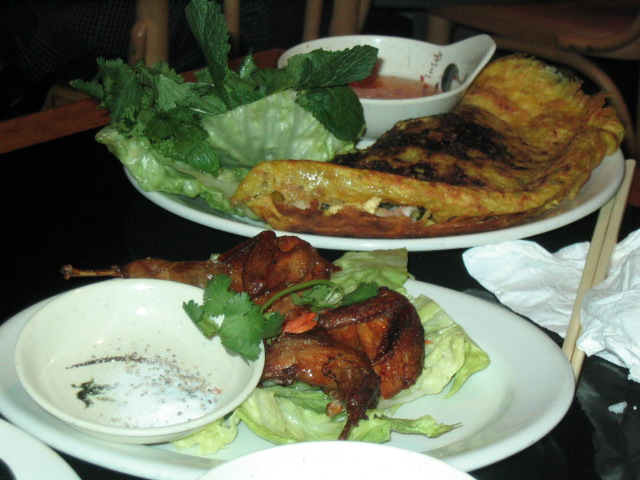
Chim cut chien gion – 5 spice quail.

Mains:

Banh xeo (Vietnamese crepe) – a thin tumeric-fragant crispy crepe with bean shoots, mung beans, ground pork, mushroom & prawn, served with our special nuoc mam sauce.

Bo xao – Wok-tossed beef with French bean, capsicum & fresh basil.

Chao tom (Sugarcane prawn roll) – Sugarcane sticks wrapped in minced prawn, char grilled & garnished with peanuts. Served with fresh herb, vermicelli, rice paper & nuoc cham sauce.

Bo la lot – Char grill parcels of minced beef flavoured by betel leaf wrapping; garnished with peanuts and Vietnamese salad.

Ca fillet rang muoi – Rockling pieces lightly battered, quick fried, served with salad and chilli.

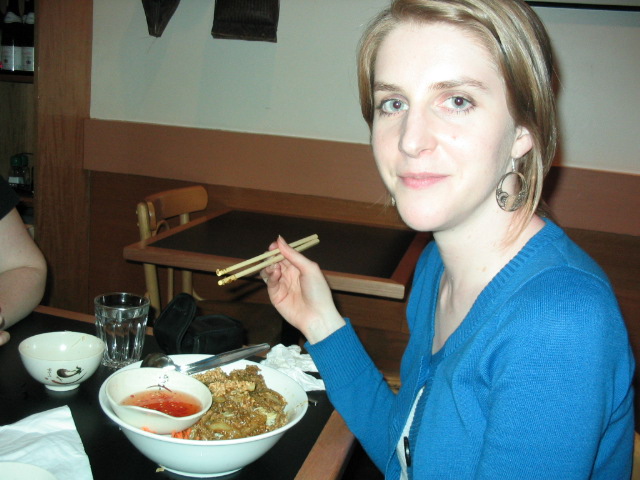
Bun with curry-lemongrass beef Pronounced ‘boon’ our version of cold rice vermicelli, shredded salad greens & herb [sic], dressed in nuoc mam sauce & sprinkled with roasted peanuts.

Entrée:
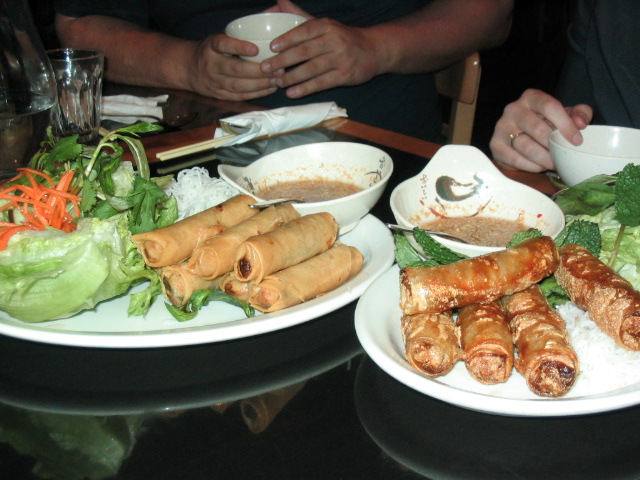

The entrée was a battle between the northern, communist Hanoi spring rolls and the southern, democratic Saigon spring rolls – but unlike the war, there were no losers in this fight. Spring rolls are an integral part of Vietnamese cuisine and both these variations were gobbled-up gleefully. At first we were perplexed by the veritable forest of extras served with the spring rolls, but we soon cottoned on. The exercise involved placing a spring roll plus shredded carrot, vermicelli, herbs and nuoc cham sauce onto a lettuce leaf, wrapping it up and stuffing it into our mouths before the sauce escaped the lettuce leaf, ran down our hands and infiltrated our sleeves. Sadly, some diners fared worse than others in this battle...

Most of us have experienced bland vegetarian spring rolls, so we were glad to find that the Saigon spring rolls had a fantastic flavour, the fresh herbs heightening the taste of the vegetables. The Hanoi rolls relied more on the meat filling to entice, while the crunchy fried rice paper outside was unusual and very popular. Both were well complemented by the dipping sauce, a delicious combination of garlic, chilli and fish sauce.

The five spice quail had a gamey flavour reminiscent of duck, and was roasted to a golden brown, providing a crispy skin which contrasted with the succulent flesh. It was served with a salt and pepper dipping dish, but the flavour was well rounded and satisfying without the extra spices.

Mains:
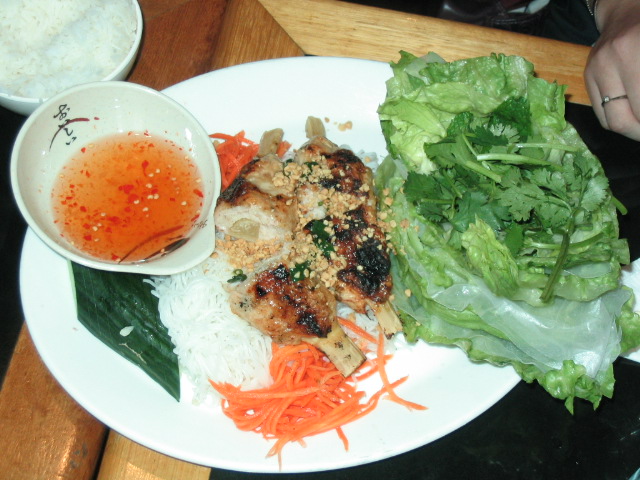

Both the Chao tom and the Bo la lot were similar to the spring rolls, insofar as they were eaten wrapped in lettuce leaf with shredded carrot, vermicelli, herbs and nuroc cham sauce. Each offered enough difference in flavour and texture to make this similarity a novelty and not monotony. The Chao tom, cooked and served on a skewer of sugarcane, was delicate in flavour and suprisingly moist in texture. Maybe it was our imagination, but the meat seemed to have taken on some of the sweetness oif the sugar cane, making for a flavour not often experienced in western cooking. The Bo la lot took a different flavouring path, with the betel leaves providing a slightly bitter counterpart to the beef.

The crepe was not pancake as we know it- a wrapping of coarsely ground grains, crispily fried on the outside, while preserving the juiciness of the filling. This dish can sometimes skimp on the seafood, but we enjoyed a good number of plump prawns mixing with the vegetables, including the suprise ingredient, mung bean. The integration of the beans with the soft inner side of the pancake resulted in an interesting mixture of grainy textures.
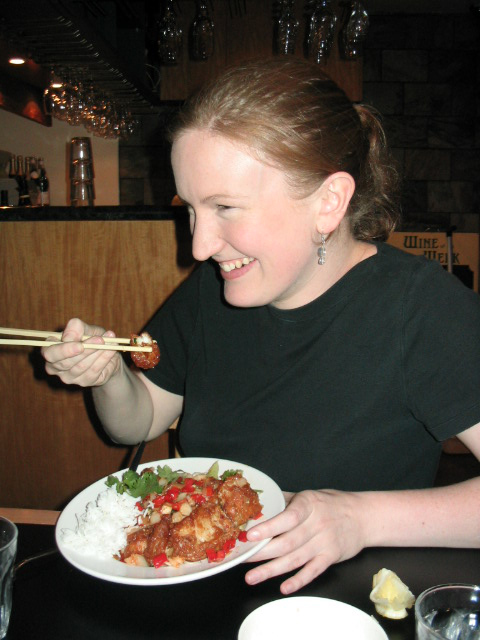

The Ca fillet rang muoi was “Vietnamese fish ‘n chips” but far less greasy and with extra 'zing'; while the Bo xao offered a version of a basic stir-fried beef and bean dish with a sauce that was far from overpowering, and meat which was well cut and tender. The Bun with curry-lemongrass beef presented an appealing exploration of flavours and textures. The unfamiliar combination of lemnongrass and tender beef melded with the crispy peanut topping, creating an enjoyable and unusual dish.

Overall:

Indochine has won many awards, and it’s not hard to see why. The staff are friendly and the service is quick. Most importantly, the food is outstanding and comes in large servings. However, it appears that half of Melbourne has figured this out too, so we recommend booking well in advance. Prices varied, but we all managed to satisfy our appetite for approximately $20 each.

Wednesday, November 15, 2006

Next Stop: Vietnam (Part 2)


Vietnamese cuisine can be divided into three regional categories: 1) Northern Vietnamese – where the food preparation is simpler in comparison to that of the Central and South, featuring stir-fries and often employing the use of soy sauce (Northern cuisine is generally more Chinese influenced). 2) Southern Vietnamese – where there is an extensive use of different vegetables, fish, and other seafood; it is typically also the most French influenced. 3) Central Vietnamese – the most unique of the three and probably the most distinct in taste being much spicier than its Northern and Southern counterparts, as well as being much more colorful. Central cooking is also obviously influenced by the royal setting (therefore by the little-known royal Vietnamese cooking), being not only very spicy and colorful but focusing on a multitude of small side dishes set on the table at once. The more dishes on a family table, the wealthier that particular family was.

Vietnamese cuisine is known for its common use of fish sauce, soy sauce and hoisin sauce. Vietnamese recipes use many vegetables, herbs and spices, including lemon grass, lime, and kaffir lime leaves. Throughout all regions the emphasis is always on serving fresh vegetables and/or fresh herbs as side dishes along with dipping sauce. The Vietnamese also have a number of Buddhist vegetarian dishes.

The most common meats used in Vietnamese cuisine are pork, beef, prawns, various kinds of tropical fish, and chicken. Duck is used less widely. The consumption of meats such as snake, soft-shell turtle, goat, and dog meat are a phenomenon enjoyed almost exclusively as "cocktail delicacies" with alcohol, and are not considered typical everyday fare. However, dog meat consumption is more widespread in the North, where it is considered a borderline mainstream meat, although not eaten nearly as often as pork or fish.

Spring rolls almost constitute an entire category of Vietnamese foods, as there are numerous different kinds of spring rolls with different ingredients in them. They include:

Bi cuon – Rice paper rolls with the bi mixture of thinly shredded pork and thinly shredded pork skin, among other ingredients, along with salad

Bo bia – Fried daikon and carrots, Chinese sausage, shredded scrambled eggs, all wrapped with vermicelli noodle in a rice paper roll. Dipped into a spicy peanut sauce (with freshly roasted and grounded peanuts).

Ca cuon – A roll with fish and spring onions.

Bo la lot – Not strictly a spring roll, but rather spiced beef rolled in betel leaf and grilled.

Other popular Vietnamese dishes:

Bo 7 Mon – Vietnamese seven courses of Beef. Typically served at weddings. A less popular version is the Ca 7 Mon - or, seven courses of fish. These multi-course meals are on the more higher-eating end of Vietnamese cuisine.

Bun Thit Nuong – One of the more popular (and simple) Vietnamese dishes, basically a combination Vermicelli plate, a kind of vermicelli counterpart to Com tam. Grilled pork (often shredded) and vermicelli noodles over a bed of greens (salad and sliced cucumber), herbs and bean sprouts. Also often include a few chopped up egg rolls, spring onions, and shrimp. Served with roasted peanuts on top and a small bowl of Nuoc cham (peanut sauce).

Com Tam – Grilled pork (either ribs or shredded) plus a Vietnamese dish called bi (thinly shredded pork mixed with cooked and thinly shread pork skin) over broken rice (what the words "com tam" actually mean in Vietnamese). The rice and meat are served with various greens and pickled vegetables, along with a prawn paste cake, chung hap (Vietnamese adaptation of Chinese Egg Foo Young), and grilled prawns. Typically restaurants will serve this popular combination rice plate with a small bowl of Nuoc cham (peanut sauce), as well as a small bowl of soup broth with spring onions (to cleanse the throat). A fried egg sunny-side-up is sometimes substituted for the chung hap.

Mi Quang – A very popular yet extremely complicated egg noodle soup dish. Originating from Quang Nam, Mi Quang varies in its preparation and features very sharply contrasting flavors and textures in (if prepared properly) a shallowly filled bowl of broth, noodles, herbs, vegetables, and chips.

For more go to:
http://en.wikipedia.org/wiki/Cuisine_of_Vietnam

Monday, November 13, 2006

Meal #13 - Vietnam (Part 1: Noodle Soups)

Just as the World Trade Organisation is currently inviting Vietnam to become its 150th member, we decided to take our trade to Pho Dzung, a Vietnamese Noodle Soup restaurant.


Pho Dzung
208 Victoria St.
Richmond


Pho Dzung is an unabashed, utilitarian establishment. There are no printed menus; the meal options are posted on the wall in English, Vietnamese and Chinese (if you can zoom into the menu shot, it's worth it just for the cringe factor re some ingredients, such as beef 'pizzle'); the chairs and tables aren’t fancy; there’s a small TV in the corner; and the mirror-lined walls reflect back on each other, prompting conversations of viewing infinity... This is a place where you eat, then leave – that is, of course, if you can finish your serving. In a restaurant where small is large, regular is huge and large is insane, you definitely get value for money – especially when the prices are respectively $6, $7 and $8. Fortunately, the cheap prices don’t indicate any skimping on the quality of the food!


This week’s Vietnamese venturers were Marty, Naomi, Nick, Helen, Rami, Caroline, Abel and Sai. As the menu consisted of random beef and chicken parts with noodles and soup, the vegetarians decided to skip this week’s meat-a-thon.


Soups:

Chin: Beef Noodle Soup with Sliced Braised Beef
Gio: Beef Noodle Soup with Beef sausage with peppercorns
Dac Biet: Beef Noodle Soup with Special Beef Combination
Tai: Beef Noodle Soup with Sliced Rare Beef
Ta Bin Lu: Beef Noodle Soup with Chicken and Beef combination


Drinks:

Mit: Jackfruit Smoothie
Nuac Dua Tuoi: Coconut Juice


Soups:


The base for each noodle soup was the same – a clear broth with rice noodles. The meat options were “varied” with many diners taking the easy, Westerner-inoffensive braised beef option. The curious and adventurous took in variations on the theme: peppery beef sausage or beef and chicken combination. Another popular option was the rare beef: the meat is added rare and cooks in the soup, making it superbly tender. Only one diner (the Asian one!) was brave enough to go all out with tendon and congealed blood cubes (amongst other parts) added to his soup.


For the record, beef tendon tastes like the broth it has been steeping in, with a soft gelatinous texture. Blood cubes taste "irony". And if you're wondering what "beef pizzle" tastes like... er, try it and tell us. We didn't go THAT far.


The tables were spread with plates of bean sprouts, lemon pieces, chopped birds eye chilli, mint leaves, chilli paste, soy sauce and other additives so that the soups could be flavoured to personal tastes. Some careless diners forgot the first rule of handling raw chilli (don’t touch your face), and as such the burning chilli sensation was not limited to tongue and mouth, but also to nostril and eye… But despite the occasional chilli mishap (or should that be "pho pas"?) everyone had a good time and highly enjoyed their meals.


Overall:

One of the best indicators of eating at an “ethnic” restaurant is said to be whether the establishment is frequented by members of that ethnicity. Not only was Pho Dzung teeming with costumers, but the vast majority of them were of Vietnamese descent. With the quality, quantity and price of the meals, there is little doubt why. While we had some difficulty with coming up with the correct change (Pho Dzung doesn’t split bills), the great food and the speed of the service ensured we were in a particularly forgiving mood.


The main downside to this restaurant is the limited meal choice – but advertising itself specifically as a noodle soup restaurant, you quickly learn that Pho Dzung serves exactly what it promises. Pho Dzung is definitely the best value-for-money restaurant we have visited in our journey so far – number 13 was lucky for us!


And with the spare change from our meal, we could afford to go out for gelati… The sign of a truly good meal.


Wednesday, November 08, 2006

Next Stop: Vietnam (Part 1: Noodle Soups)

Although Vietnamese cuisine can be divided in three geological regions (Northern, Central and Southern), one of the unifying dishes is the noodle soup. Vietnamese cuisine boasts a huge variety of noodle soups, each with influences and origins from every corner of the country and each with a distinct and special taste. A common characteristic of many of these soups is a rich yet very clear broth.

Arguably the most widely known Vietnamese dish is Pho, a beef noodle soup with a rich, clear broth achieved from hours upon hours of boiling bones and different herbs. Variations featuring tendon, tripe, meatballs, chicken leg, chicken breast, or other chicken organs (heart, liver, etc.) are also available. The dish is garnished with ingredients such as green onions, white onions, coriander leaves, ngo gai ("saw leaf herb"), mint, basil, lemon or lime, bean sprouts, and chile peppers. The last four items are usually provided on a separate plate, which allows customers to adjust the soup's flavor as they like. Some sauces such as hoisin sauce, fish sauce, and the Thai hot sauce Sriracha, are popular additions as well. Pho can be eaten for breakfast, lunch or dinner.

The broth is generally made by boiling beef (and sometimes also chicken) bones, oxtails, flank steak, and spices, and takes several hours to prepare. Spices include Saigon cinnamon, star anise, and ginger. The noodles, called bánh pho in Vietnamese, are traditionally cut from wide sheets of fresh rice noodles similar to Chinese shahe fen, although dried noodles (also called "rice sticks") may also be used.

Some Vietnamese restaurants have begun catering to non-Vietnamese customers by opening in other areas. Adapting to local tastes and diets, some Vietnamese restaurants in Western countries have also started making chicken-based pho (pho gà) or even vegetarian pho, in addition to the traditional beef noodle soup. Seafood-based pho has also been known to exist, although it is not considered real pho. Another variation of pho involves using egg noodles instead of rice noodles. There are also Korean and Thai variants of pho available.

Other Vietnamese noodle soups:

Bun Bo Hue – Spicy beef noodle soup originated from the Royal Hue City of Central Vietnam. The rice noodle used in this soup is different (much thicker) from the one used in Pho. The broth is from cooking beef bones for a long period of time, as well as a large variety of different spices including lemongrass. Often served with mint leaves, bean sprouts, lime wedges and lettuce. While both Bun Bo Hue and Pho are beef based soups, their broths are vastly different due to different spices (and other ingredients eaten in the soup). Bun Bo Hue is like the extremely spicy and hearty version to what is often a much lighter (and more mild, in comparison) Pho. The broth in Bun Bo Hue, unlike pho - also gives off a reddish tint.

Bun Rieu – Noodle soup made of thin rice noodles and topped with crab and shrimp paste, in a broth that includes tomatoes or (the original variant) chilis. Served with bean sprout, prawn paste, mint leaves, whole-leaf lettuce.

Banh canh – A thick rice noodle soup with a more basic broth. Often includes pork, crab, chicken, shrimp, spring onions and freshly sauteed onions sprinkled on top.

Mi bo vien – Chinese influenced egg noodle soup with beef balls, shrimp, and (sometimes) won tons

Mi quang – A very popular yet extremely complicated egg noodle soup dish. Originating from Quang Nam, Mi Quang varies in its preparation and features very sharply contrasting flavors and textures in (if prepared properly) a shallowly filled bowl of broth, noodles, herbs, vegetables, and chips.

from:
http://en.wikipedia.org/wiki/Vietnamese_cuisine
http://en.wikipedia.org/wiki/Phở