One of the hardest regional cuisines to locate, even in multicultural Melbourne, Filipino promises flamboyant flavours accompanied, at Wow Pinoy at least, by equally flamboyant karaoke…
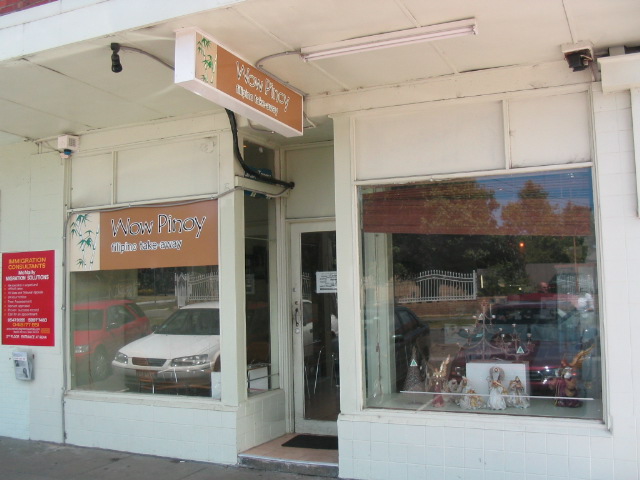 Wow Pinoy
Filipino Take-Away
5 Avondale St. Springvale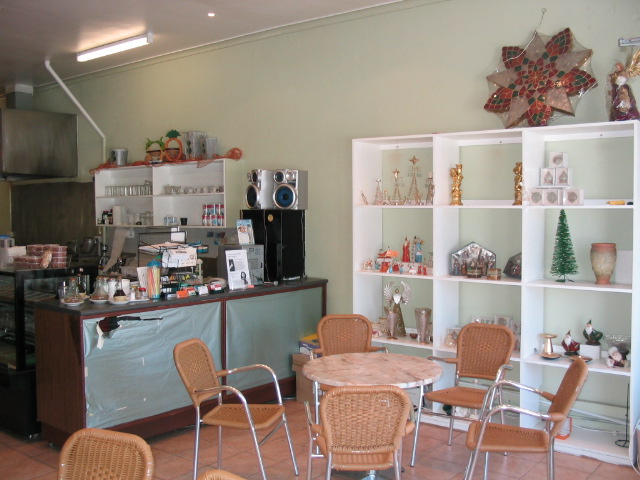
A suburban shopping strip in Springvale might seem like an odd place to have a karaoke restaurant. Clearly the locals thought so, because after noise complaints Wow Pinoy has had to stop offering a microphone to diners. Pictures of popstar wannabes still decorate the walls but otherwise Wow Pinoy is now a regular non-singing café and takeaway.
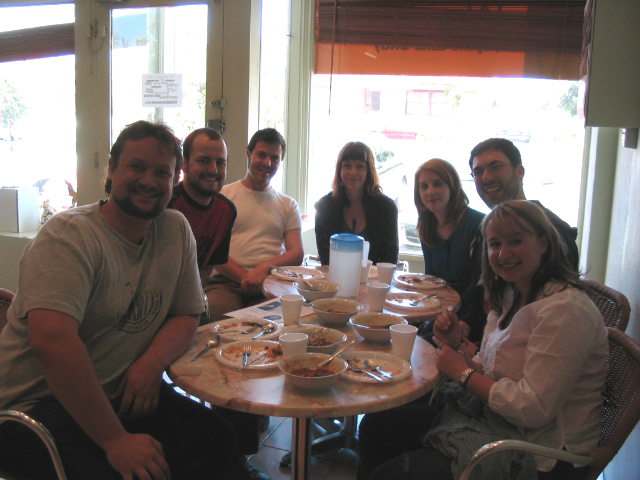
Seven of our intrepid team – Rami, Caroline, Paul, Deb, Nick, Naomi and Marty – travelled to Springvale for a taste of the Philippines. Although Wow Pinoy does offer a wider range of dishes for catering events (like karaoke parties), the lunch time selection was limited to a series of baine mairee trays of curry, some pork barbecue sticks and takeaway noodles. After our last baine mairee experience we decided to steer away from the more adventurous dishes, such as the black pudding and curry of “pork insides”, and tried to strike a happy medium between authenticity and western sensibilities.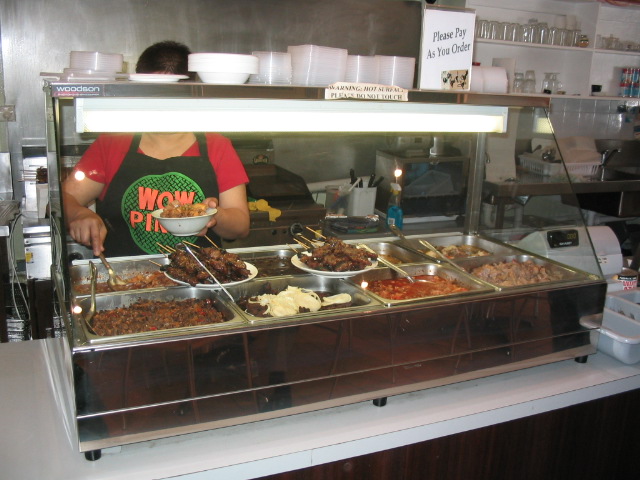 Mains:
Pork barbecue sticks
Beef in peanut butter sauce
Beef steak in soy and onion sauce
Chicken and peas in tamarind sauce
Pork and vegetables in tomato-based sauce
Jackfruit in coconut curry
Dessert:
Glutinous rice jelly in toasted coconut
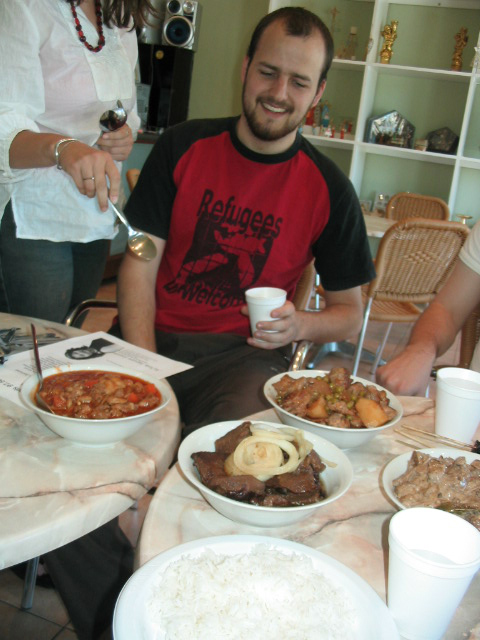
Mains: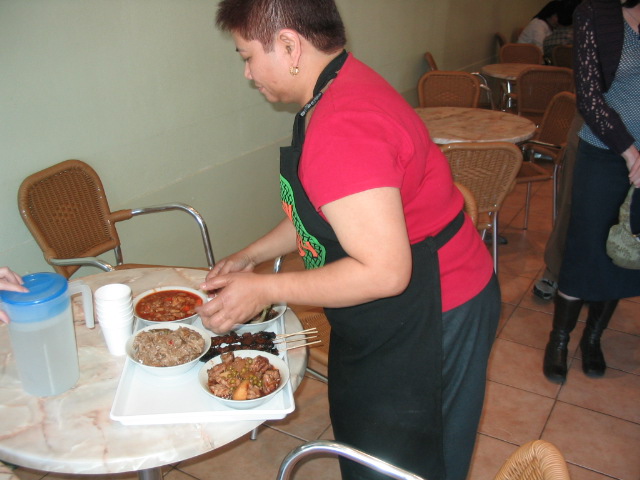 The curries were simple, usually dominated by one or two strong flavours. The pork curry for instance tasted strongly of tomato and carrot, whereas the beef steak dish was overpoweringly soy-driven. Made with fatty meat, and the occasional touch of tripe, the dishes were quite heavy on the stomach. The barbecued pork, mercifully lean, was coated in a sweet marinade and served cold. On the whole the two pork dishes were probably the best handled and most enjoyable.
 Jackfruit is unique to south-east Asian cooking and deserves special mention. The fruit has a solid meaty texture and it is used in the place of actual meat in curries. While the jackfruit curry was enjoyable, the strong coconut flavour and unfamiliar texture did put some diners off. For a western audience, it was perhaps a bit challenging to be the only vegetarian option on the menu.
Dessert:
There was a selection of takeaway desserts, including sweet bean drinks with coconut and tapioca puddings. We chose the colourful glutinous rice jellies, served sprinkled in toasted coconut. Although mild in flavour, these made for a pleasing afternoon snack.
Overall: While our experience of the meal was mixed, the staff were wonderful: helpful and unfailingly friendly. Wow Pinoy is aimed specifically at the local Filipino community, so much so that they advertise their nearness to Tina’s Phil-asian Grocery on their business cards. While we were there Wow Pinoy seemed to be the hub of Filipino activity, so clearly they are doing something right. Although Wow Pinoy is only open until 7pm (due to them being in a residential area), the staff are willing to cook a Filipino-style banquet for group gatherings, and will even deliver. To book this call them on (03) 9547 8088.
For a cheap lunch ($7) it was not too bad but the selection was limited, especially for vegetarians and the thirsty – the only drinks on offer were coke, water and poppas – and the heavy curries weren’t to everybody’s taste. For what it was, Springvale was a long way to go, especially after all that time practising Bon Jovi…

