Showing posts with label India. Show all posts

Wednesday, March 14, 2007

Meal #30: India (Part 2: Southern India)

South India is a highly linguistic-cultural region of India. The predominant Dravidian language family consists of 23 languages indigenous to, and spoken principally in, South Asia by more than 210 million people. The four major Dravidian languages of southern India – Telugu, Tamil, Kannada, and Malayalam – have independent scripts and long documented histories. Nevertheless, for many diners there was something lost in translation with this meal.

Madras Banyan Tree
Specialising in South Indian Cuisine
924, Nepean Highway, Hampton East
Tuesday to Sunday 6pm to 10 pm


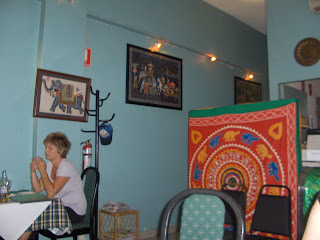
Madras Banyan Tree is a loud, busy restaurant specialising in South Indian Cuisine. It is so busy that in order to cater for our large group, they had to squeeze a couple of small tables together between the entrance and the service counter. The décor at Madras Banyan Tree is simple but stylish, focusing on earthy tones, small Indian paintings, and the occasional ‘shrine-on-a-ledge’.


This week’s sojourningly intrepid, South Indian sampling ingesters (alliteration is fun!) were Ruvinda, Dylan, Rami, Caroline, Sai, Paul, Deb, Nick, Naomi and Dom


Entrée:

Plain Idli Plain rice cakes served with coconut chutney and sambar

Mains:

Vegetarian Thali Rice, bread, sambar, rasam, two veggies, dhal, yoghurt, pickle, pappadam, medhu vadai and sweet
Non Vegetarian Thali Rice, bread, sambar, rasam, veggies, chicken, lamb, pickle, pappadam and sweet
Lamb Masala Lamb pieces cooked in a thick rich spicy gravy

Special Dosai Surprise yourself with our house speciality king size dosai

Drinks:

Mango Lassi

Entrée:


Idlis’ are traditional South Indian steamed rice cakes made from fermented rice and lentil dough. They are fairly flavourless on their own; however they come to life when eaten with sambar (lentil broth) and/or spicy coconut chutney. Idlis’s are very crumbly, which makes eating them with cutlery almost impossible, so we resorted to the tradition eating utensil for this dish – the hand.

Mains:


Most diners opted for the set meal – Thali. The name for this dish comes from the “Thali” or dish in which it is served. The Thali comprises of a metal plate with a number of small metal bowls known as Katoris on it. It offers a variety of vegetarian and non vegetarian dishes, papadam, bread and rice. It even included dessert! This meal enabled diners to taste a variety of dishes in small servings. Highlights included: sambar (lentil broth), lentils cooked with tamarind, onions, tomatoes and spices; lamb in a mild vindaloo-like sauce; chicken in a cinnamon-based sauce; and medhu vadai, a savory doughnut.

The special dosai was definitely special! As the description on the menu suggested, we were surprised by the king size dosai – it was friggen HUGE! Major props to Nick for eating the entire thing!!! Oh, and if you were wondering, dosai is a traditional savoury pancake made out of rice and lentil dough, and was served with a selection of dips including chutney and sambar.


Overall:

It is amazing how people on the same table can have completely different dining experiences. Half the table enjoyed their meal, while the other half were not overly fond of theirs. Most of this negative feeling was due to vegetarian thalis being served about 10 minutes after the non-vegetarian thalis, and that many of the thali dishes were served luke-warm. Our South Indian experts at the meal, however, thought that the food was excellent and very authentic (even being served on traditional metal plates), and that the food didn’t need to be any warmer. Perhaps Madras Banyan Tree was too authentic for some diners (although there is no excuse for a restaurant to not serve all the mains at the same time). At $16 and $18 respectively, the vegetarian and non-vegetarian thalis are great value for the amount of food you get, although it may be advisable to bring your own portable microwave…


Thursday, March 08, 2007

Next Stop: India (Part 2: Southern India)


Indian cuisine is distinguished by its sophisticated use of spices and herbs and the influence of the longstanding and widespread practice of vegetarianism in Indian society.

According to the traditional Indian medical system Ayurveda, food is either satvic (pure), rajasic (creative) or tamasic (resistant, destructive) depending on its character and effect upon the body and the mind.

Food is an integral part of India's culture, with cuisines differing according to community, region, and state. Indian cuisine is characterized by a great variety of foods, spices, and cooking techniques. Furthermore, each religion, region, and caste has left its own influence on Indian food.

The tomato, chilli, and potato, which are staple components of today's Indian cuisine, are relatively recent additions. They came to India from America through Europe. Islamic rule introduced rich gravies, pilafs and non-vegetarian fare such as kebabs, as well as such fruits as apricots, melons, peaches and plums. During this period the Portuguese introduced foods from the New World such as potatoes, tomatoes, squash and chilies.

South Indian cuisine is distinguished by a greater emphasis on rice as the staple grain, the liberal use of coconut and curry leaves particularly coconut oil, and the ubiquity of sambar and rasam (also called saaru) at meals.

South Indian cooking is even more vegetarian-friendly than north Indian cooking. The practice of naivedya, or ritual offerings, to Krishna at the Krishna Mutt temple in Udipi, Karnataka, has led to the Udipi style of vegetarian cooking. The variety of dishes which must be offered to Krishna forced the cooks of the temple to innovate. Traditional cooking in Udupi Ashtamatha is characterized by the use of local seasonal ingredients. Garam masala is generally avoided in South Indian cuisine.

The dosa (savoury crepe), idli (lentil patties), vada (lentil or potato pattie, shaped liked a donut), bonda (fried potato balls), and bajji (battered and fried vegetables) are typical South Indian snacks.

Monday, March 05, 2007

Meal # 29: India (Part 1: Northern India)
Nestled between the Vindhya Mountains and the Son and Kosi rivers, Northern India is predominantly rural, with only 49% of households boasting electricity. And while it was a little tough to get water glasses, gladly we didn’t have to eat by candle light at this week’s meal.

Vandana’s Indian Restaurant
2/676 Centre Rd
East Bentleigh
5-10pm, 7 nights

This restaurant is hugely popular with hungry locals, who flock to Centre Rd to pick up their take-away meal, or squeeze onto a small table in the bustling, unassuming dining area. A large flag graces the shop-front window, and small Indian paintings and craft works decorate the neutral walls. A large elephant printed fabric draped over the counter catches the eye as you enter.


After repeated invasions by Arab, Turk, Afghan and other kingdoms, North India is now a mixture of Arab, Turk, Afghan, Indo-Aryan and Huns in their composition. Adding our genes into the mix this week were Helen, Deb, Paul, Marty, Sai and Naomi. Unable to make the regular dining time, Rami and Caroline also visited the restaurant the following evening.


Entrée:

Chicken Tikka Chat - Pieces of chicken tossed with cucumber, tomato and lettuce in traditional tamarind dressing.

Onion Bhaji - Onion rings battered with chick pea flour and deep fried.

Main:


Beef Vindaloo - Beef marinated in a blend of spices, vinegar and chili

Mutter Paneer - Cottage cheese cooked with green peas

Aloo Saag - Potatoes cooked with fresh pureed spinach

Malai Kofta - Potato and cottage cheese dumplings served in chef’s special sauce

Fish Malabar - Fish cooked with coconut flavor gravy in mild sauce

Sides:


Basmati and Saffron Rice

Naan and Roti

Papadam

Dessert:

Pistachio or Mango Kulfi (Ice cream)

Gulab Jamun - Milk dumpling in traditional sweet syrup

Entree:


A cursory decision to include "something tikka", due to its traditional place in Northern Indian cuisine, turned out to be a wise choice. The Chicken Tikka Chat was a delicious salad of tomato, cucumber and chicken cooked in a delicious combination of yoghurt, ginger and other spices. The juices from the sauce mingled with the salad vegetables, making this an enticing opening to the meal. The onion bhaji were expected to be onion and chickpea patties. However, in northern style, they consisted of rings of onions thickly battered with chickpea flour and deep fried- delicious. The chick pea coating was crunchy, but thick enough to ensure that the flavour of the oil was not overly dominant.

Main:


Herein lies the secret to Vandana's success; the curries are absolutely delightful. Our shared meal featured three vegetarian options. Aloo saag, primarily consisting of spinach, was highlighted by a complex blend of spices. The Malai Kofta, dumplings in 'special sauce' were similarly tasty and well balanced. The Mutter Paneer, with peas and cubes of cottage cheese, featured a rich, gravy-like sauce. The cheese was firm and superbly complementary to the sauce.


The carnivores at the table were excited by the arrival of the Vindaloo, even more so once the dish had been tasted. It's always exciting to enjoy an excellent example of an Indian dish found in average takeaways, and Vandana's Vindaloo sets high standards. The heat of the dish is immediately apparent, but is in no way detrimental to the intricate balance of spices in the sauce. The meat was tender and plentiful. The other meat based dish, the fish malabar, was a pleasant surprise. With firm chunks of fish, the coconut based curry was mildly flavoured, and was a strong variation from our other choices. And the best thing about the curries at Vandana? The sauces are delicious enough to be enjoyed with no other accompaniment than rice, which was generously served.


Dessert:


Dessert options were limited, but considering the offer of free dessert when you book for two, one can hardly complain. Kulfi, in two flavours, was sweet and very creamy. Gulab Jamun is a dish best shared; an interesting texture, but the sweet flavour of the syrup can quickly become overpowering.

Overall:


Service in this small, busy eatery was friendly, but haphazard. There seemed to be a lack of staff, and certainly a lack of dish-hands; it was tough to obtain water, and when it did arrive it was without glasses. It is clear that neither location nor outstanding service have punters returning to Vandana. Their motivation is simple; the food. Quite simply some of the best Indian food we've tasted, the balanced spices and wide variation of delicious sauces left us happily sated. A visit here can inspire extreme behaviour in the race for a favourite dish. We recommend ordering a large variety, and getting stuck right in, as Paul does below.

------------------------------------------------

Unable to attend the dinner on Saturday night, Rami and Caroline went to Vandana’s on Sunday, and had Banquet A. All the dishes were great; the entrees were highlights of the meal, as was the satay-like vegetarian curry. The chicken jalfrezi had a wonderful mixture of spices and flavours, and the lamb rogonjosh was an accomplished take on a standard Indian dish. The dessert was sickly sweet and no more than a mouthful was required.


Banquet A

Entrée:

Samosa – Home made triangular pastry with potato, peas & spices

Tandoori Chicken Chicken marinated in spices and cooked in clay oven

Seekh Kabab – Lamb mince spiced and cooked on skewers in tandoor

Mains:

Lamb Rogonjosh – Tender lamb cooked in onion, tomato & oriental spices

Chicken Jalfrezi – Bonless pieces of chicken cooked with ginger, garlic, capsicum & onion

Vegetarian Curry

Sides:

Plain Rice

Naan – plain flour bread baked in tandoor

Papadams

Mango Chutney

Sweets:

Gulab Jamun – Milk dumpling in traditional sweet syrup

Wednesday, February 28, 2007

Next Stop: India (Part 1: Northern India)

North Indian cuisine is characterised by its proportionly higher use of dairy products; milk, paneer (cottage cheese), ghee (clarified butter), and yoghurt are all common ingredients. Southern India cuisine milk products, though consumed in large quantities, are usually used unaltered. North Indian gravies are typically dairy-based and employ thickening agents such as cashew or poppy seed paste. Milk-based sweets are also very popular fare, being a particular specialty in Bengal and Orissa. Other common ingredients include chillies, saffron, and nuts.

North Indian cooking features the use of the tawa (griddle) for baking flat breads like roti and paratha, and tandoor(a large and cylindrical coal-fired oven) for baking breads such as naan, kulcha and khakhra; main courses like tandoori chicken also cook in the tandoor. Other breads like puri and bahtoora, which are deep fried in oil, are also common. Most of North Indian food, like anywhere else in India, is vegetarian. However, fish and seafood are very popular in the coastal states of Orissa and West Bengal.

The samosa is a typical North Indian snack. The most common (and authentic) samosa is filled with boiled, fried, and mashed potato, although it is possible to find other fillings.

The staple food of most of North India is a variety of lentils, vegetables, and roti. The varieties used and the method of preparation can vary from place to place. Some of the most popular Northern Indian dishes and foods include:

Buknu – powered mixture of several spices: salt, black salt, sonth (dried ginger powder), haldi (Turmeric), jeera (Cummin seeds), harra badi, harra choti, baheda, marodfali, baibirnag, peepar, hing (asafoetida), amla and oil.

Chaat – small plates of savory snacks (usually based on fried dough, with various other ingredients), typically served at the side of the road from stalls or carts.

Jalebi – a sweet made from deep-fried, syrup-soaked batter and shaped into a large, chaotic pretzel shape.

Achar – variety of spicy pickled side dishes or condiments.

Sharbat – "juice" that is prepared from fruits or flower petals. It is sweet and served chilled. It can be in concentrate form and eaten with a spoon or mixed with water to create the drink. Some of the very popular sharbats are made of (any of the following): Rose, Bel, Gurhal (Hibiscus), Lemon, orange, ananaas, falsa.

Poha – flattened rice flakes that are reconstituted with hot water to make a rice porridge or paste, depending on the amount of water added.

Some common North Indian foods such as the samosa, the various kebabs, pulao, and most of the meat dishes arrived in India with the Muslim invaders. Much of North and South Indian nonvegetarian cuisine as well as Pakistani cuisine originates from Middle Eastern cuisine. Pakistan and Bangladesh were a part of North and East India prior to the partition of India., and ss a result, the cuisines in these countries are very similar to northern and eastern Indian cuisine.
Information from: