Showing posts with label Japan. Show all posts

Tuesday, December 26, 2006

Meal #19 – Japan (Part 2: Teppanyaki)

According to Danny Katz, teppanyaki comes from the Japanese words ‘teppan’ meaning “Don’t wear your best clothes when you eat here because it’s likely they’re going to get a little…” and ‘yaki’ meaning “yucky”. Thankfully, the staff at Yuriya Teppanyaki Japanese Restaurant provided us all with stylish paper napkins so our clothes wouldn’t get all yaki.

Yuriya
Teppanyaki Japanese Restaurant
172 Little Bourke St, Melbourne City
Fully Licensed
Open 365 Days
11:30am - 11:00pm
Fri & Sat Open
Till 2:00am
9663 3838


One of the best known teppanyaki restaurants, Yuriya is situated in the heart of Melbourne’s Chinatown. The restaurant is divided into two sections: downstairs is your typical Japanese eatery, serving sushi, teriyaki, tempura etc; upstairs, is all about the Teppanyaki. There are several teppanyaki hotplates, each encompassed by seats, ensuring that the diner is right in on the cooking action. To steal, and bastardize, a theatre term, this is ‘dinner in the round.’

This week’s team of tenacious teppanyaki tasters were: Sai, Helen, Erika, Daniel, Philip, Dom, Saeng, Caroline and Rami. Yuriya offers several set menus ranging from $39 to $65, we all ordered the $39 meal (what a bunch of cheapskates!):

Miso Soup – with mushroom and tofu

Choice of Vegetarian ‘Sushi’ Rolls or Seafood Cocktail

Teppanyaki (served with steam rice & salad) – Prawn, Squid, Chicken, Fillet Steak, Dumplings, Vegetables (mushrooms, spinach and bean shoots)


House Dessert – Lemon and Rice, and Sesame Ice-Cream

The Meal:


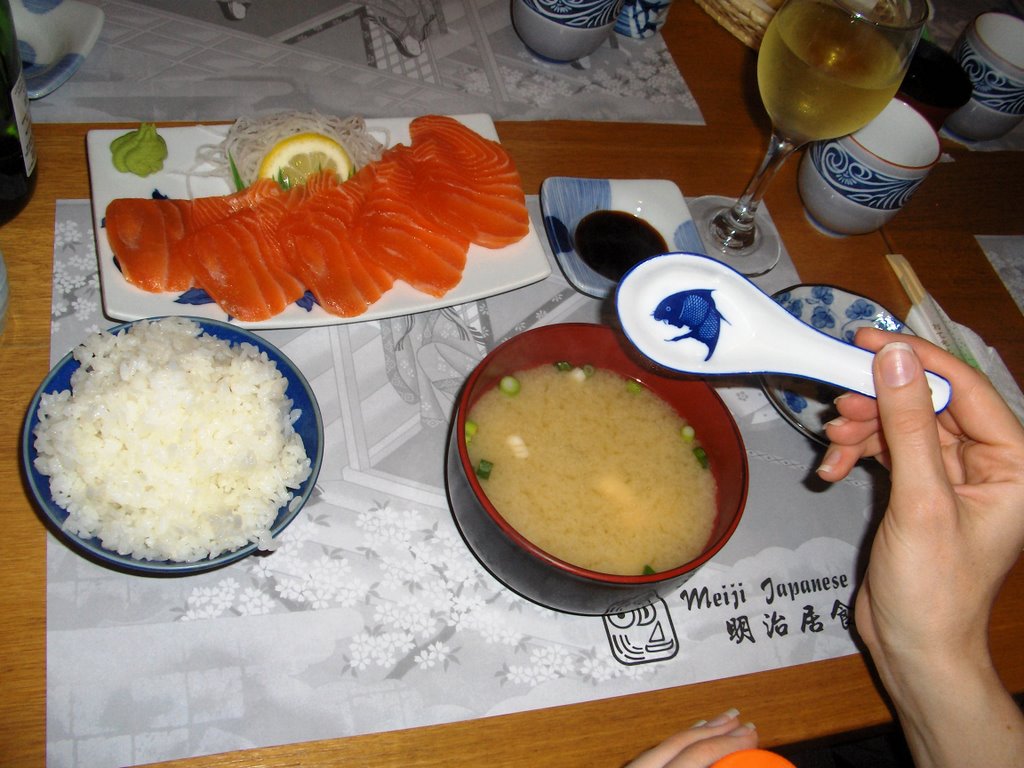
The appetizer wasn’t your typical miso soup, including slices of mushroom and cubes of soft, white tofu. These unusual additives were welcomed, but were difficult to eat as the soup was served in the traditional manner…without spoons!


Entrée consisted of either your typical vegetarian sushi rolls, served with soy sauce and top-shelf wasabi, or chilled seafood cocktail. Neither were ground-shattering, but they were enough to get our taste-buds ready for the main meal.


The staff at Yuriya were very accommodating, and as such those diners that did not want seafood for their mains were given extra servings of the chicken and fillet steak. The fillet steak was served first. The meat was well-cooked, medium to medium-rare, tender and delicious. The peanut dipping sauce provided helped to highlight the natural beef flavour. The chicken was next and was cooked in soy sauce, giving it a slightly sweet and salty flavour, a perfect contrast to the beef.


The seafood was next. According to our Japanese expert Philip, the prawns were a bit too “prawny”; apparently in Japan, prawns have a lighter flavour then what we were served. Conversely, other diners thought the prawns were “fantastic” and the “highlight” of the meal. Only a handful of diners, however, were game enough to eat the prawn legs! Nevertheless, everyone agreed that the squid was a bit chewy, but that the pork dumplings were great.


The vegetables were a welcome break from the piles of meat. The mushrooms were cooked in butter and were delicious! The spinach was delightful, cooked in garlic and soy sauce, and was complimented well by the subtlety seasoned bean shoots.


Desert consists of homemade ice-cream, a scoop of lemon and rice and a scoop of sesame. The flavour of the lemon and rice ice-cream was subtle and was a pleasant palate-cleanser, especially after the contrasting flavours of the tappenyaki. The sesame ice-cream was nice, but a bit strong.

Overall:


Although more expensive than our average Around the World meal, you definitely get your money’s worth at Yuriya Teppanyaki Japanese Restaurant. It’s dinner and a show – and what a show! There was flaming meat, and pillars of smoke, amazing knife work and meat flying hither and yon. But let’s not forget the food, which was not only delicious, the fillet steak being the unanimous highlight, but was also plentiful. The staff are helpful and friendly, accommodating to differing dietary requirements, and quickly re-filling empty water glasses – even before you realize that your glass was empty! If you’re looking for a special night out, and something out of the ordinary, we recommend you try the dinner and a show that is teppanyaki.

PS - Sorry about the photos, but we forgot the camera...again...and had to rely on mobile phone cameras. The first two photos are from Yuriya's website...

Wednesday, December 20, 2006

Next Stop: Japan (Part 2: Teppanyaki)


Teppanyaki is a type of Japanese cuisine that uses an iron griddle to cook food. The word "teppanyaki" is derived from teppan, which means iron plate, and yaki, which means grilled.

Typical ingredients used for teppanyaki are beef, shrimp, scallops, lobster, chicken and assorted vegetables. Soybean oil is typically used to cook the ingredients.

In Japan, many teppanyaki restaurants feature Kobe beef, or Wagyu beef. Wagyu ("Japanese Cattle") are renowned for flavor, tenderness, and fatty well-marbled texture, qualities enhanced by the traditional (and well guarded) methods of raising Kobe beef. Tajima-ushi cattle reportedly receive regular massages with Japanese rice wine and are fed hops.

Another popular dish served at a teppanyaki restaurant is okonomiyaki. Okonomi means "what you like" or "what you want", and yaki means "grilled" or "cooked"; thus, the name of this dish means "cook what you like, the way you like". Side dishes of mung bean sprouts, zucchini, garlic chips or fried rice usually accompany the meal. Some restaurants provide sauces in which to dip the food; usually, in Japan, only soy sauce is offered.

Teppanyaki is not a traditional Japanese cooking style. The originator of teppanyaki-style cooking is the Misono restaurant chain in Japan; they introduced teppanyaki in 1945. In the United States, teppanyaki was made famous by the Benihana restaurant chain which opened its first restaurant in New York in 1964. It differs from the traditional Japanese teppanyaki in that the chef also performs a small show for the customers. The show can range from juggling utensils, flipping a shrimp into his shirt pocket, tossing an egg up in the air and splitting it with his knife to a flaming onion volcano.

For more information: http://en.wikipedia.org/wiki/Teppanyaki

Monday, December 18, 2006

Meal #18: Japan (Part 1: Rice and Sushi)

Japan: a country of terrifying modernity, time-honoured tradition and uncooked seafood. This week we began our journey through Japan with a meal of rice and sushi at:

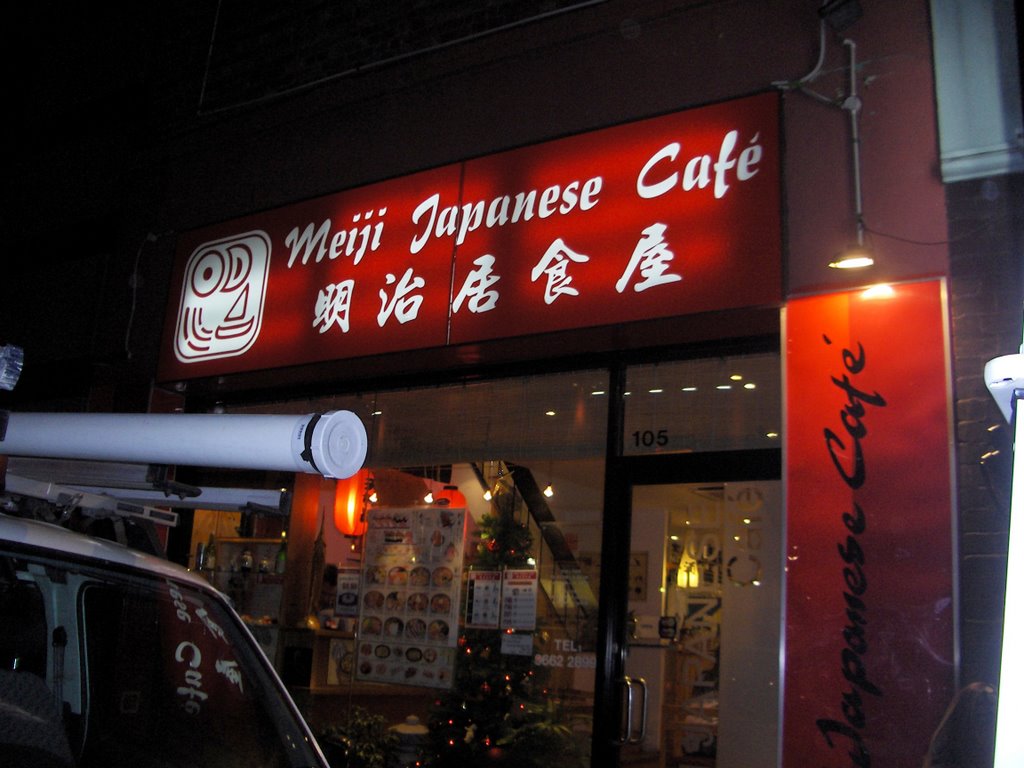
Meiji Japanese Café
Little Bourke St
Melbourne Chinatown

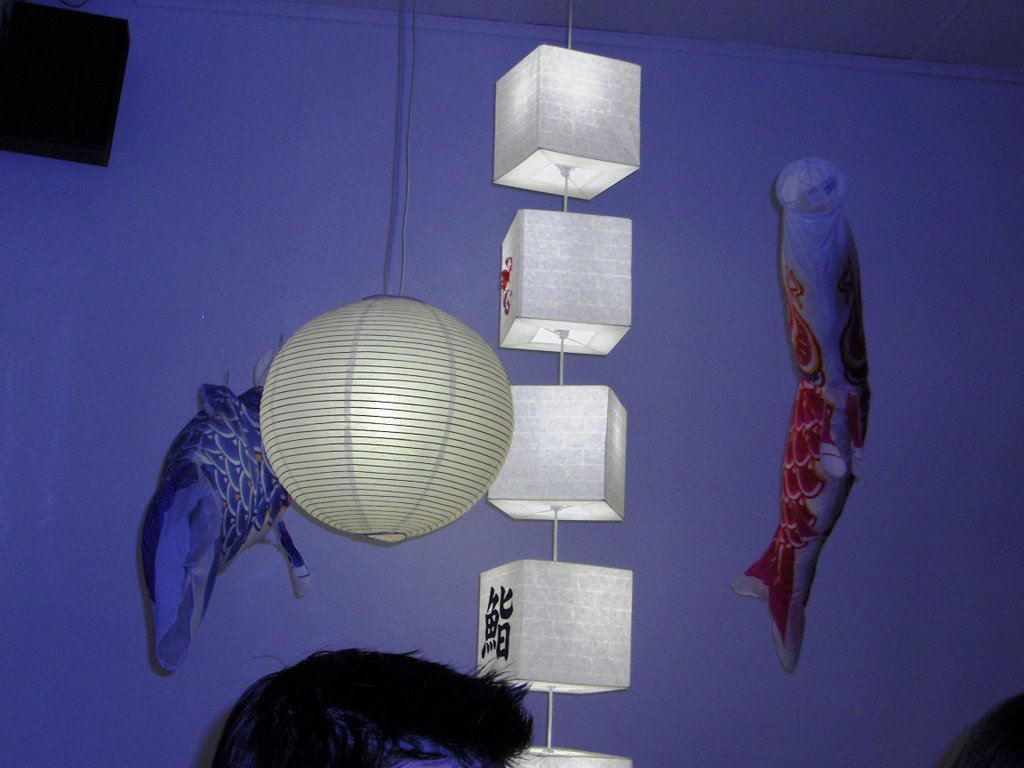
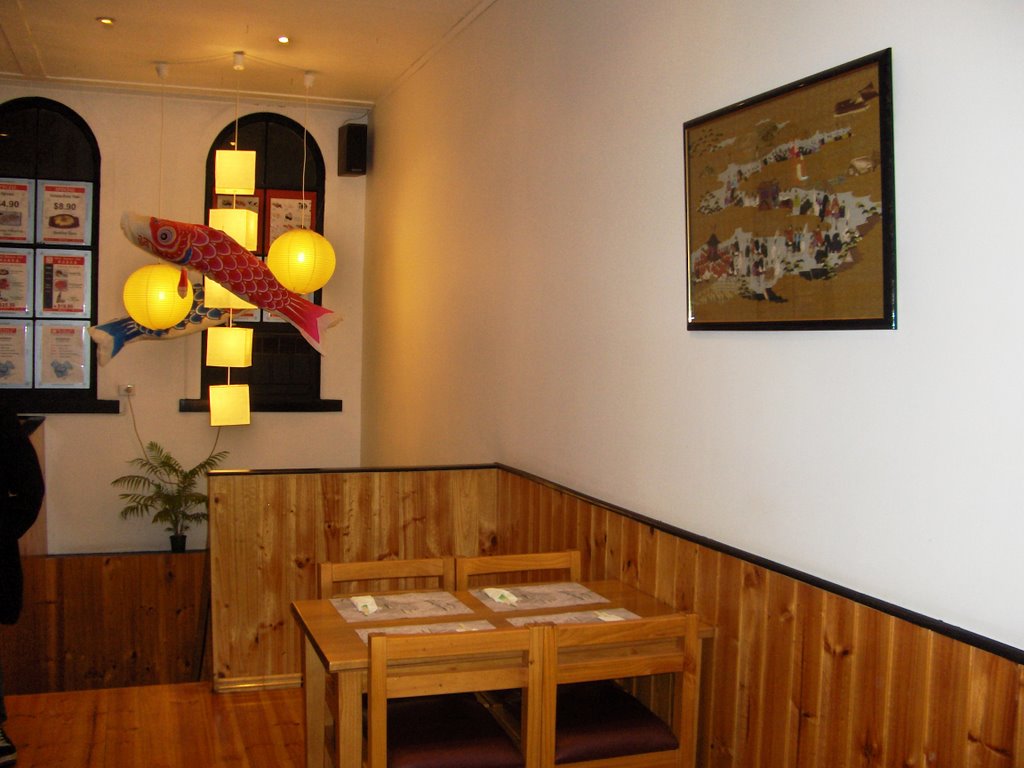
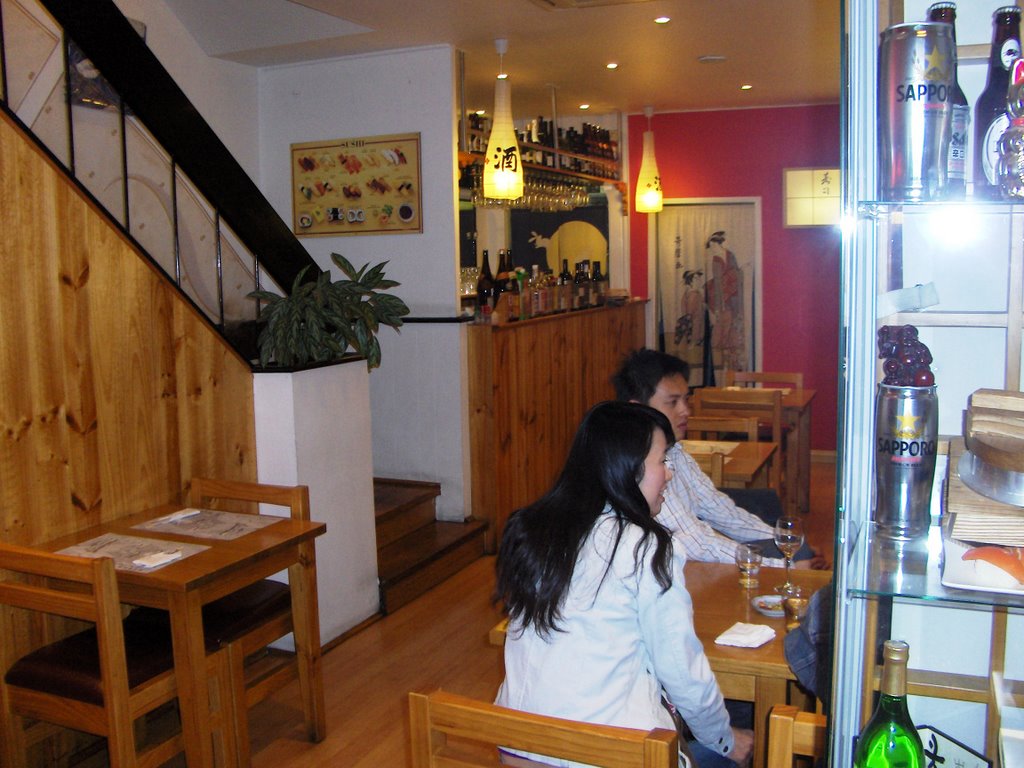
Just one of many cafes along the Chinatown strip touting for business, Meiji Café has a number of tables to acoomodate small groups downstairs, and a larger dining area up above. Stark white walls and plain pine furniture provide an uncomplicated backdrop to well placed Japanese paintings and fabric prints. Welcoming you up the stairs are a range of Japanese style kite-cum-light fixtures, encouraging a lively and inviting atmosphere.

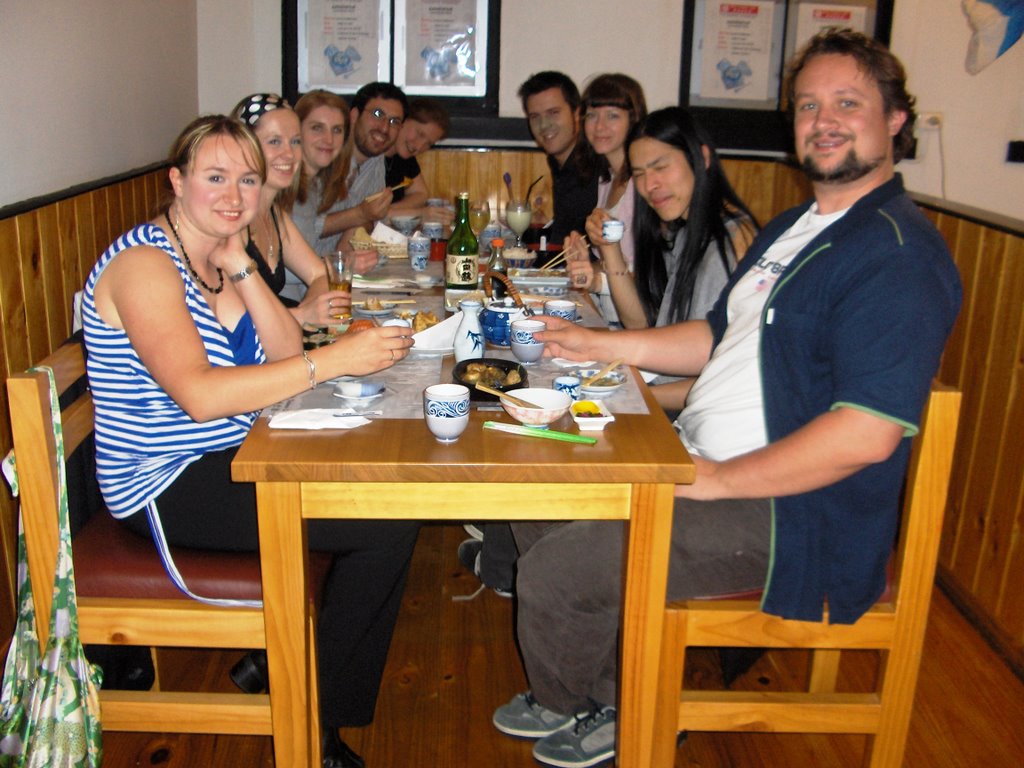
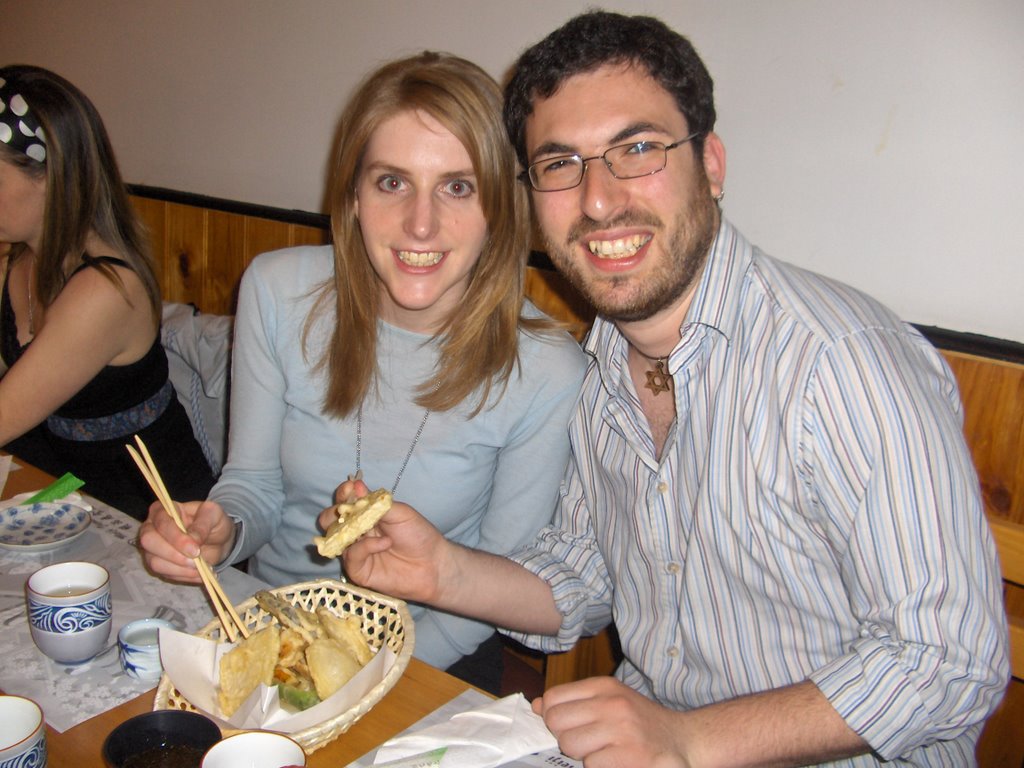
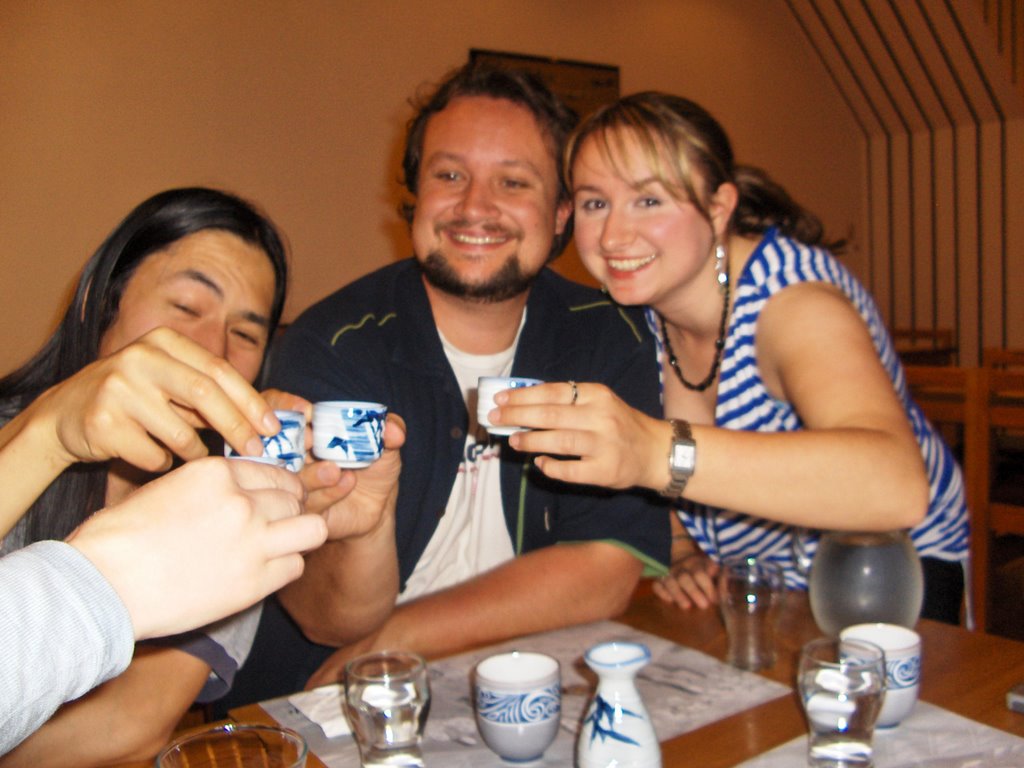
The Japanese invasion was inverted, with a horde of 80 meals diners descending upon Meiji Café: Naomi, Imogene, Caroline, Rami, Helen, Paul, Deb, Sai and Nick.

Entrée:

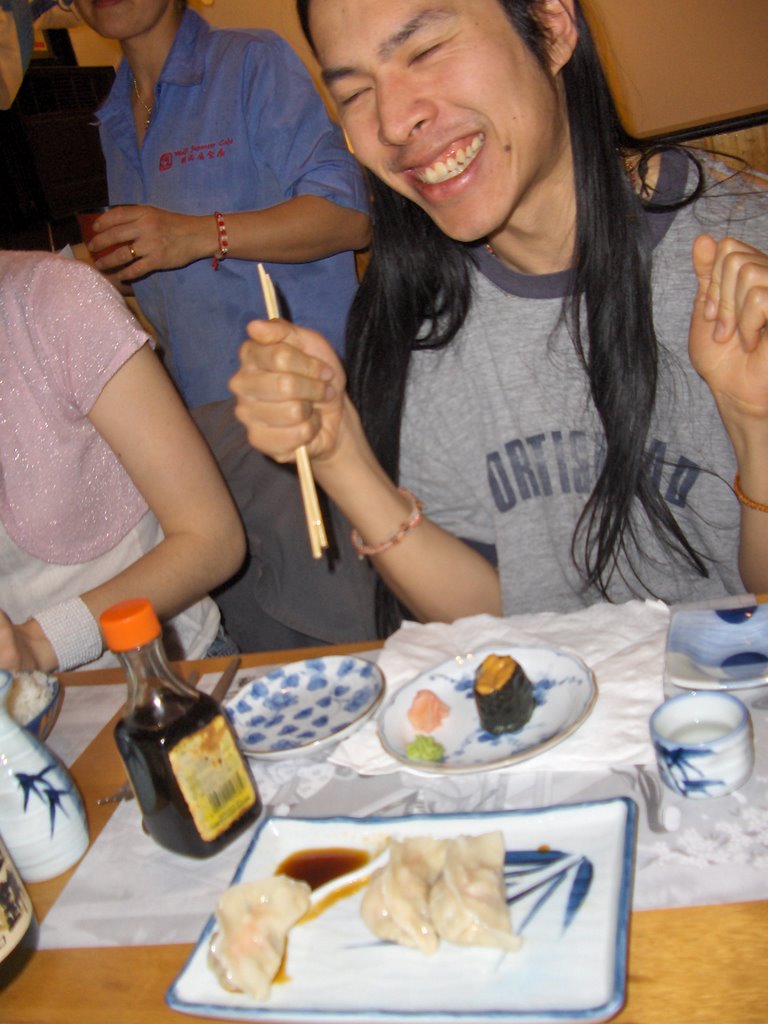
Gyoza – Japanese Prawn and Pork Dumplings
Hotate Bata Yaki - Scallops in Garlic
Tori Kara – Japanese Deep Fried Chicken
Miso Soup
Vegetable Tempura


Sushi:
Sushi Nigiri - Sea Urchin Sushi
Cucumber Rolls
Salmon Rolls
Salmon Sushi
Yellowtail Sushi
Squid Sushi
Prawn Sushi
California Rolls

Mains:

Salmon Sashimi
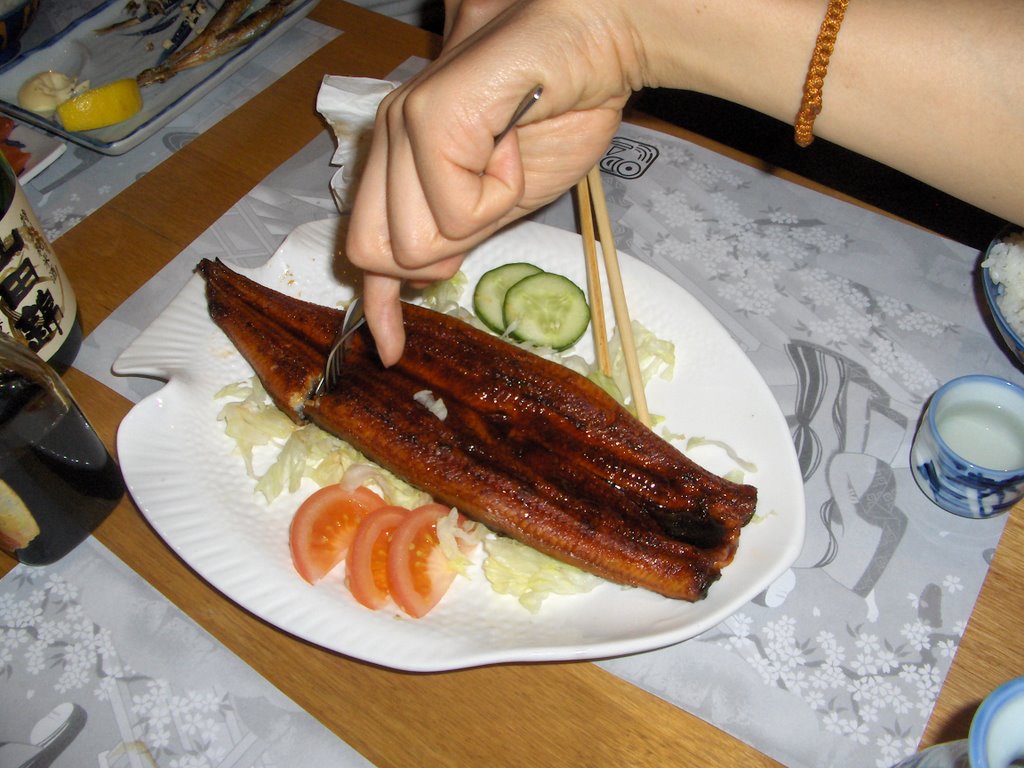
Unagi Teriyaki
- Eel cooked in teriyaki sauce
Shishamo – Japanese fried fish
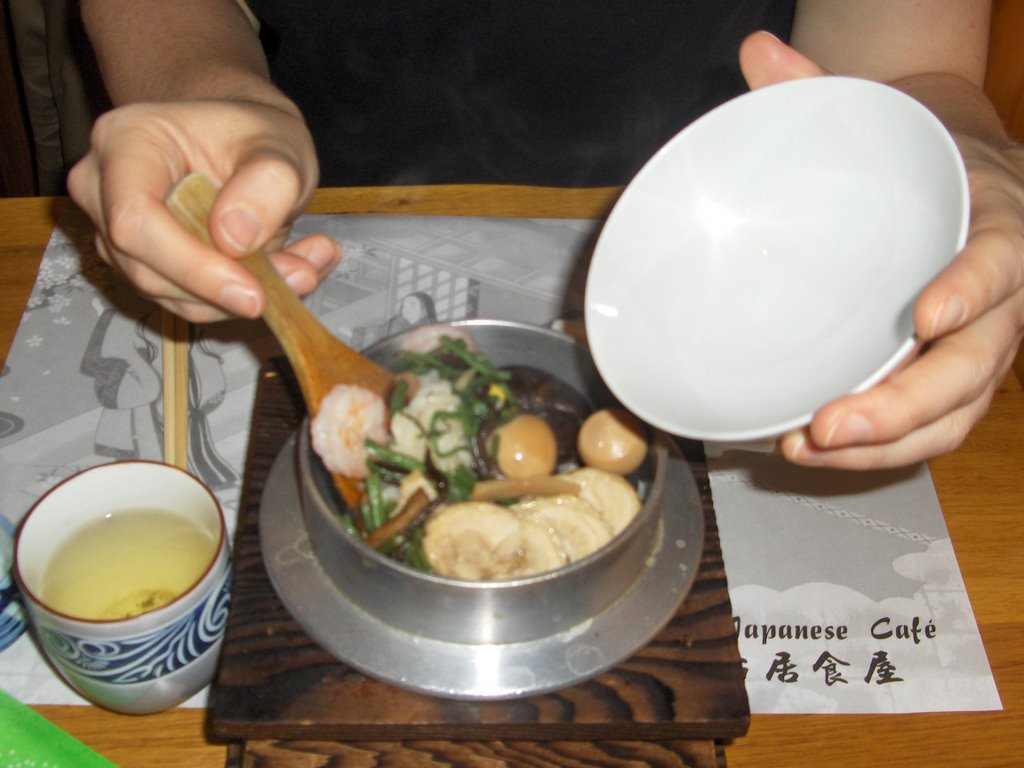
Gomoku Kamameshi – Rice with Prawn, chicken, eggs and vegetables
Beef Kamameshi – Rice with Beef, onion and red ginger
Aigamo Kamameshi – Rice with duck, pork and vegetables
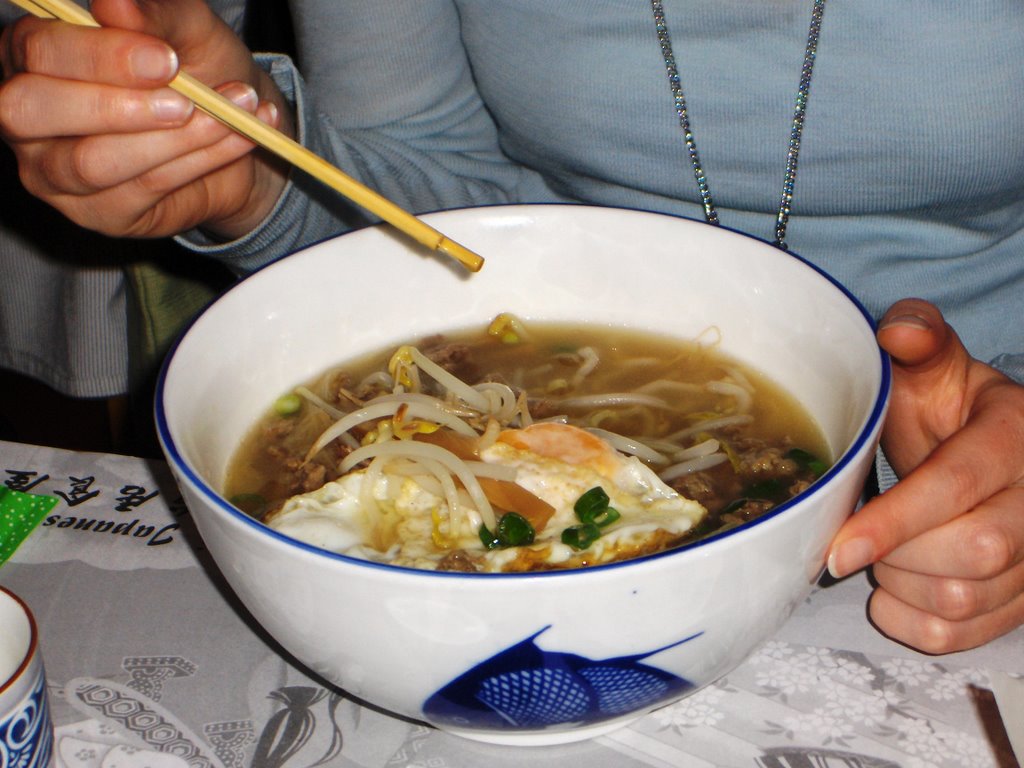
Gyuniku Udon – Udon noodle soup with beef, onion, spring onion and half-raw egg


Beverages:

Avocado Smoothie
Japanese Green Tea
Plum Wine
Sake

Entrée:

A number of items made their way to the tables at once, indicating the prompt and friendly service at Meiji. It did lead to some confusion as dishes expected as a main were served with entrees, but the disorder was dismissed without a second thought as we happily tucked in to our food. A good gyoza often indicates a good Japanese meal to follow, and based on the delicious dumplings we began with, we eagerly anticipated the remaining dishes.

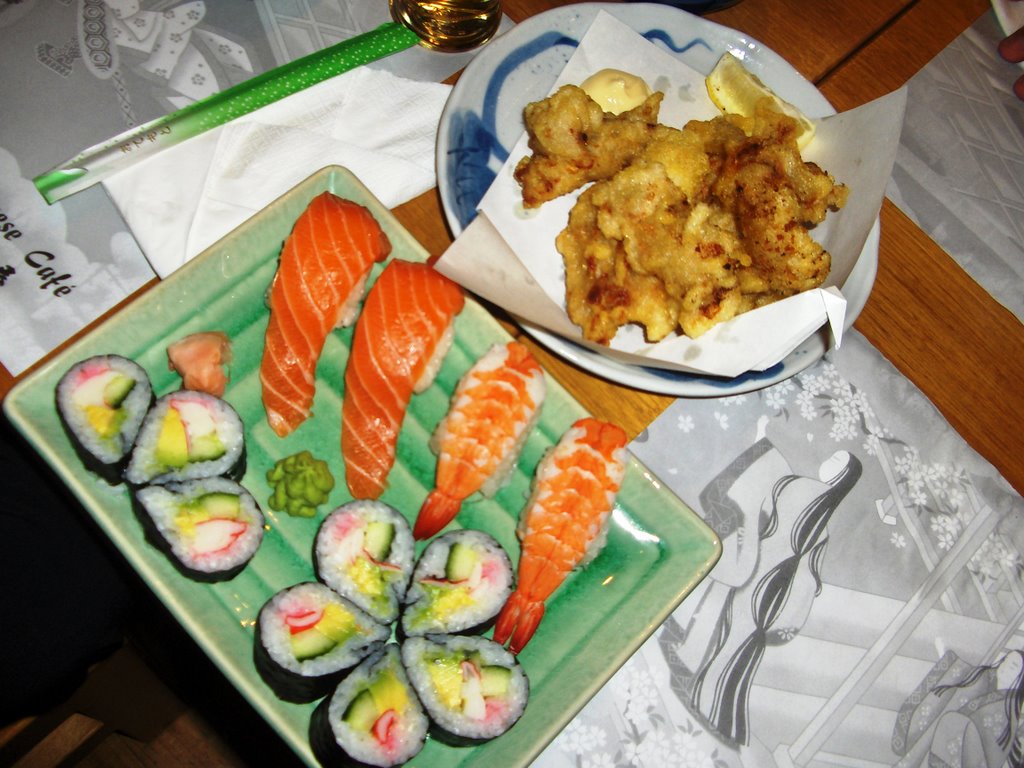
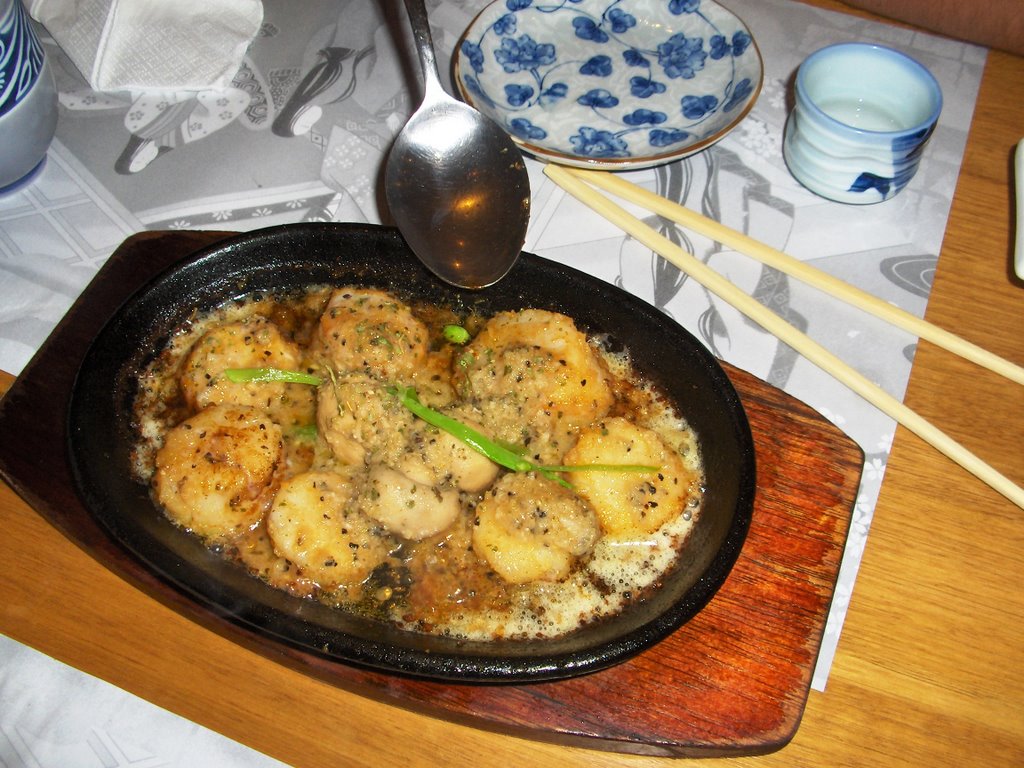
Meiji prepares deep fried dishes tempura style - a light batter complimented the flavour of the chicken, and ensured it was a delighfully far cry from any fowl of Kentucky origins. The vegetables were saltier but light, tasty and very pleasing. The shallow fried scallops were outstanding, slightly crisped but retaining a juicy texture and subtle flavour, perfectly matched with garlic and champignons.

The sushi at Meiji is fresh and flavoursome. Take care with the wasabi- it has quite a kick to it. Few of us were particularly adventurous with our sushi choices; sadly one brave sushi eater found herself remembering the squid sushi after the meal. The sea urchin, while only one diner was game enough to try it, was apparently quite tasty.


Mains:

The main meals, washed down with sake and plum wine, continued to please. Meiji’s signature dish is kamemashi, a rice casserole made using a “combination of traditional and technological new Japanese cooking methods” which Meiji claims to have been the first to introduce to Melbourne. Served in the metal pots in which they’re cooked, they come in a variety of flavours, some boasting unusual combinations of meats or whole boiled eggs. The ones we had were tasty, with balanced, slightly smokey flavours and tender textures.

The unagi teriyaki was a divisive dish, with not all diners ready for the slippery texture of eel meat. Those who enjoy eel, however, loved it, with generous serves of fresh, boneless meat, perfectly marinated.


The shishamo proved quite a challenge. The small fish were served whole, heads and all, leaving one diner confused as to whether she was eating them the right way. However, the delightful flavour ensured that she continued to attack them in her own, unorthodox fashion.

Overall:

While some diners were intimidated with certain Japanese flavours, for service and quality Meiji can not be faulted. Its extensive menu means diners are not restricted to california rolls alone, and if you’re willing to experiment, Meiji offers dishes entirely unfamiliar, but guaranteed to be well prepared and flavoursome, as well as standard Japanese favourites. Service was quick, friendly and helpful, and at around $25 a head (including alcohol), Meiji served up one of our most enjoyable dinners so far.

Wednesday, December 13, 2006

Next Stop: Japan (Part 1: Sushi and Rice Dishes)


There are many views of what is fundamental to Japanese cuisine. Many think of sushi or the elegant stylized formal kaiseki meals that originated as part of the Japanese tea ceremony. Many Japanese think of the everyday food of the Japanese people—especially that existing before the end of the Meiji Era (1868–1912) or before World War II.

A standard Japanese meal nearly always consists of a bowl of cooked white Japanese rice (gohan) as shushoku with accompanying tsukemono (pickles), a bowl of soup, and a variety of dishes known as okazu - fish, meat, vegetable, etc. Traditional Japanese meals are sometimes classified by the number of okazu which accompany the rice and soup. As Japanese meals, especially at the higher end, consist of several small dishes, the concept of a "side dish" is not a part of Japanese meal organization. The simplest Japanese meal, for example, consists of ichiju-issai ("one soup, one side" or "one dish meal"). This means soup, rice and pickles, and one accompanying dish. A traditional Japanese breakfast, for example, usually consists of miso soup, rice, a pickled vegetable and grilled fish. The standard traditional meal, however, is called ichiju-sansai ("one soup, three sides"), or soup, rice & pickles, and three dishes, each employing a different cooking technique. The dishes may be raw fish (sashimi), or grilled, simmered (sometimes called boiled in translations from Japanese), steamed, deep fried, vinegared, or dressed dishes. Ichiju-sansai often finishes with pickles such as umeboshi and green tea.

Since Japan is an island nation, its people consume much seafood including fish, shellfish, octopus, squid, crab, lobster, shrimp, whale and seaweed. Although not known as a meat eating country, very few Japanese consider themselves vegetarians. It is particularly difficult to find vegetarian cuisine in Japan, as even vegetable dishes are prepared with fish stock or garnishes. Although most Japanese eschew eating insects, there are a couple of exceptions. In some regions, grasshoppers (inago) and bee larvae (hachinoko) are not uncommon dishes. The larvae of a species of caddis fly (zaza-mushi), harvested from the Tenryu river as it flows through Ina City, is also boiled and canned, or boiled and then sautéed in soy sauce and sugar. Salamander is eaten as well in places.

Donburi is a one-bowl lunchtime dish, consisting of a donburi (big bowl) full of hot steamed rice with various savory toppings:

Katsudon - donburi topped with deep-fried breaded cutlet of pork (tonkatsudon)
Tekkadon - donburi topped with tuna sashimi
Oyakodon (Parent and Child) - donburi topped with chicken and egg (or sometimes salmon and salmon roe)
Gyudon - donburi topped with seasoned beef
Tendon - donburi topped with tempura (battered shrimp and vegetables).
Unadon - donburi topped with broiled eel with vegetables.

Sushi is vinegared rice topped or mixed with various fresh ingredients, usually fish or seafood.

Nigiri-zushi - This is sushi with the ingredients on top of a block of rice.
Maki-zushi - Translated as "roll sushi", this is where rice and seafood or other ingredients are placed on a sheet of seaweed (nori) and rolled into a cylindrical shape on a bamboo mat and then cut into smaller pieces.
Temaki - Basically the same as makizushi, except that the nori is rolled into a cone-shape with the ingredients placed inside. Sometimes referred to as a "hand-roll".
Chirashi - Translated as "scattered", chirashi involves fresh sea food, vegetables or other ingredients being placed on top of sushi rice in a bowl or dish.

For more information: http://en.wikipedia.org/wiki/Japanese_cuisine