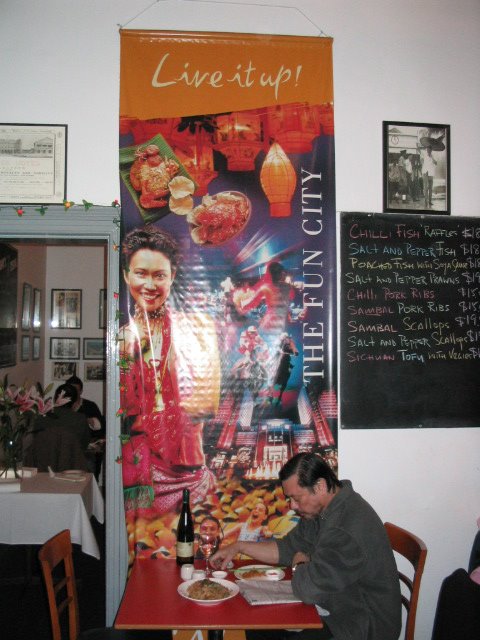
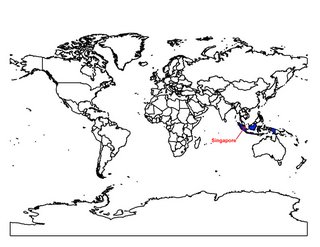
Singapore is renowned for its strict law enforcement and its many and varied fines. This meal…wait for the worst pun you’ve read in ages…was a fine one!
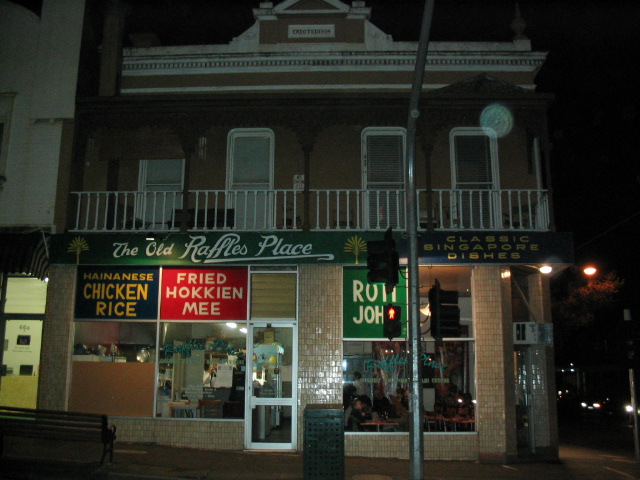
The Old Raffles Place
Home of Singapore Heritage Cuisine
Open Monday to Saturday
68-70 Johnston Street, Collingwood 3066

This week we went to The Old Raffles Place which (according to their menu) prides itself on “blend[ing] old heritage tradition cooking where the past splendour [sic] of the Singapore years can be tasted.” This should actually read: we serve food from the good ol’ British colonial rule of Singapore. Of course, (and for those who ate lung last week, thankfully) this meant that the meal was far more suited to our lazy Western sensibilities than last week’s traditional Sumatran fare.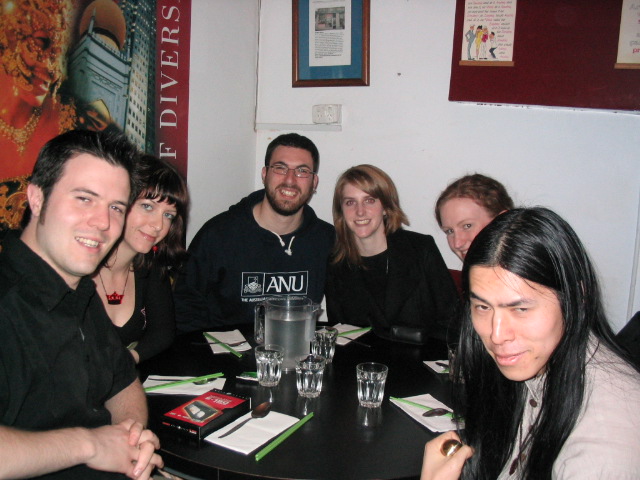
On this leg of our gastronomic adventures we had Deb, Paul, Helen, Sai, Rami and Caroline – the usual bunch of culinary misfits of vegetarians, celiacs and pseudo-kosher keepers.
Entrée:
Toa Payoh Chye Tow Kueh / Carrot Cake – Not what you’d expect! Made from riceflour and fresh “white radish” wokfried with rich sweet soya sauce, garlic, eggs and preserved turnip. It’s Singaporean favourite all day snack not to be missed [sic].
People’s Park Chee Cheong Fun – Homemade soft rice rolls steamed and tossed with delicious Hoisin sauce and sprinkled with sesame seeds, crispy shallots, spring onions and drizzle with fragrant sesame oil [sic].
Kallang Roti Beef Murthabak – Crispy fried dough pancake wrapped with curry flavour mince beef, onions, peas, fresh eggs and served with curry sauce.
Novena Roti Prata with shredded onions and eggs with curry sauce – Shredded onions and scrambled eggs wrapped in dough pancake and fried to perfection.
Mains:
Little India Mee Goreng with Seafood or Chicken – Over the years, this interaction of cultures has blossomed into a colorful fusion of cuisine unique to the peoples of Singapore. Mee Goreng is an Indian noodle dish with onions, green peas, bean sprouts, tomatoes, potatoes, egg and Chinese greens vibrantly tossed in a wok and fried with a spicy sauce. A power packed meal on its own! (we had the chicken)
Waterloo Street Hainanese Fried Bee Hoon – Rice vermicelli tossed I a wok and fried with capsicum, garlic, Chinese Greens, bean sprouts, onions and seafood with a distinct salt-and-pepper seasoning (we ordered this dish with the seafood replaced with tofu)
Komalas Vegetarian Curry with Tofu – A combination of fresh vegetables, tomatoes, green chillies and tofu in a mild spicy curry both.
Padang Beef Curry with Potatoes – Tender diced beef with potatoes and stewed with Indian curry spices to create a wonderful taste of curry flavours.
Dessert:
Pisang Goreng – Banana fritter served with ice-cream
Sago Melaka – Sago, coconut milk and palm sugar.
Drinks:
Cendol – Mung beans, grass jelly, sugar syrup, coconut milk and ice.
Chin Chow – Herbal jelly with sugar syrup.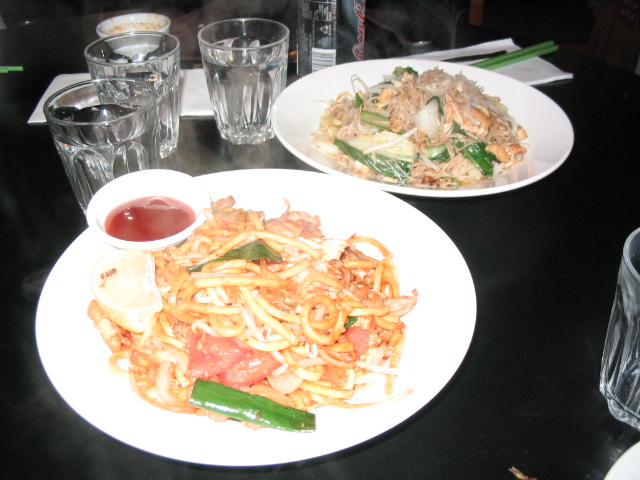
Entrée:
The absolute highlight of the meal! Both roti pancake dishes were wonderful and the carrot cake was definitely not what we expected – although the radish and preserved turnips did leave a lingering aftertaste that made it feel like we hadn’t brushed our teeth in days (although for some of the diners this could very well have been the case!). The soft rice rolls were delightful – with a slippery texture that literally rolled down the back of your throat!
Mains:
All the mains were great – especially the chicken Mee Goreng. Surprisingly though, although the cut of beef was better this week, the sauce we had last week at Minang was far superior as it was more spicy and less sweet compared to this weeks take on the same dish.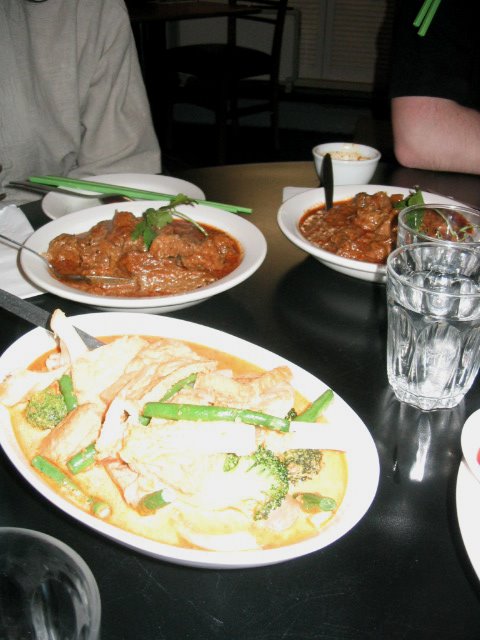
Desserts:
BANANAS!!!! Finally a restaurant that had bananas on the menu that actually had bananas available. Nevertheless it was obvious that we are currently going through a banana drought as, although they were nicely fried, the bananas themselves were disappointedly, slightly under-ripe.
Overall:
The service was friendly and although the waitress had initial difficulties understanding the dietary restrictions of our resident celiac, she came through at the end with flying colours. The head waiter even came to clarify certain items on the bill, which was a nice change from restaurants that will charge you for what they think you ordered and not necessarily what you did order. The ambiance was great with photos, posters and flags reminding us that we were indeed dining at a Singaporean restaurant – and at less than $20 each (since we shared dishes) a truly affordable and delicious meal.