Showing posts with label China. Show all posts

Monday, February 19, 2007

Meal #27: China (Part 6: Tibet)

With an average elevation of 4,900 m, Tibet is often called the “Roof of the World”, thus with high expectations we began the meal that would signify the end of the “oriental” portion of our journey.

Wild Yak
Tibetan Restaurant/Café
350 High St. Northcote
Monday – Saturday
5:30pm – 11:00pm

Wild Yak Tibetan Restaurant/Café is a two-tiered eatery, with a small dining area at the back near the bar/service area overlooking a larger dining area in the front. The walls are covered in Tibetan paintings; there are Tibetan-style light fittings; plus the prerequisite Buddhist shrine – all, combining with the brightly painted walls and ceiling, providing amble ambience for the nights dining. However we were alarmed by the stuffed yak located on above the bar, which kept a watchful and possible wild, eye on the customers below.


Wild Yak has recently moved from the older artsy, bohemian Smith St in Fitzroy, to the newer artsy, bohemian High St in Northcote. Obviously there must be a great demand for Tibetan food amongst the artsy, bohemian crowd…we tried to fit in as best as possible…

This week’s tenacious Tibetan tasters were Paul, Deb, Rami, Caroline, Helen and Naomi. We all decided to order a banquet meal in order to experience as much of the available Tibetan cuisine as possible. The staff were friendly and attentive, allowing us to include an extra vegetarian main dish in the banquet.

Banquet A:

Entrée:

Momo – Steamed beef dumplings

Tsel momo ngopa – Mixed vegetable dumplings, steamed & fried (veg)

Chasha khatsa – Chicken fillet marinated in tamari & spices, stir fried with onion & chilli

Shoko khatsa – Freshly cooked potatoes with a topping of spring onions & tomatoes (veg)

Channa khatsa – Freshly cooked chick peas with ginger & garlic (veg)

Mains:

Chasha phing – Soya bean threads sautéed with chicken fillets, fungus & fresh season vegetables

Lamb curry – Lamb cooked with pieces of potatoes in a mild curry sauce

Dhal – Slow cooked lentils with fresh herbs & spices (veg)

Tsel nyamo-kyurmo – Fresh vegetables cooked with lemon, honey, tomatoes & herbs (veg)

Tsel curry – Mixed vegetables cooked in an exotic curry sauce

Sides:

Steamed rice

Tingmo – Tibetan bun

Tibetan green salad

Herbal tea (Jasmine)


Entrée:

This meal was a true gateway between the Orient and the Indian subcontinent. Nothing highlighted this more than the dumpling entrées. Momos are steamed dumplings made from fresh coarse ground beef combined with herbs, spices, wrapped in a small parcel of hand made dough. They are reminiscent of the steamed dumplings common in other parts of China (such as Shanghai). The tsel momo ngopa, on the other hand, where reminiscent of Indian samosas as they were deep fried, and the mixed vegetable fillings were flavoured with curry. Both types of dumplings were served with a tasty hot sauce.


The chasha khatsa, shoko khatsa and channa khatsa were served together on a large plate, and the different flavours both complimented and contrasted with each other remarkably well. A small plate contained just the two vegetarian dishes was kindly provided for vegetarian diners.

Mains:

The mixing of oriental and subcontinental cooking styles was further evident with the mains course with both stir fried and curry dishes strongly represented. There was even a serving of the subcontinental classic: dahl.


The two highlights of the meal were the lamb curry and the vegetarian tsel curry. The lamb was tender and the mild curry sauce was richly flavoursome. The vegetarian curry was delightful, with the flavours present in the sauce playing wonderfully with those of the various vegetables.


The other vegetarian dish, tsel nyamo-kyurmo, possessed an interesting sweet, honey-based sauce. Unfortunately the sweetness overpowered most of the promised lemon and herb flavours. Another dish that failed to inspire was the chasha phing, however it was not due to it presentation! Served atop a bed of chicken, black fungus and vegetables is a vast nest of soya bean threads – making this dish very reminiscent of classic Chinese dishes that use a similar presentation style. The flavours, however, were overtly subtle, yet that could just be due to the curry dishes it was competing with.


Sides:

Apparently Tibetan green salad is just code word for homemade coleslaw. On the other hand, the tingmo was a favourite element of the meal for most diners. This Tibetan bun is similar in taste and texture to that of a Chinese pork bun, but without the meat filling. The tingmo was wonderful in cleansing the palette between dishes, as well as for sopping up the curry sauces.


Overall:

Wild Yak served up a delicious meal that combined the best of what the Orient and the subcontinent have to offer, including generous servings! The banquet cost only $19 each, and we were not charged for the extra vegetarian dish nor for the extra servings of rice we ordered. This more than made up for the fact the head waitress repetitively forgot to supply us with water and, subsequently, enough glasses in such hot weather. Besides the water gaffe, the staff were friendly and attentive – and we were all amused with the t-shirt that the waiter wore, and to continue the theme: yakity yak, we will come back.


Next week we begin our journey of the subcontinent; farewell oriental cuisine, we will miss you (well except the Sumatran meal – not surprisingly that restaurant has closed down since we ventured there)

Wednesday, February 14, 2007

Next Stop: China (Part 6: Tibet)

The Cuisine of Tibet is quite distinct from that of its neighbours, as only a few crops (not including rice) grow at such high altitude. The most important crop is barley. Dough made from barley flour, called tsampa, is the staple food of Tibet. This is either rolled into noodles or made into steamed dumplings called momos, one of the most popular foods in Kathmandu. Momos of Buff (meat of water buffalo) are considered the best; however momos of chicken, mutton, pork, as well as of vegetables (predominantly onions and cabbage), potato, and cheese are also eaten.
Meat dishes are likely to be yak, goat, or mutton, often dried, or cooked into a spicy stew with potatoes. Mustard seed is cultivated in Tibet, and therefore features heavily in its cuisine. Yak yoghurt, butter and cheese are frequently eaten, and well-prepared yoghurt is considered something of a prestige item. Other Tibetan foods include:
Balep korkun – a central Tibetan flatbread that is made on a skillet rather than in an oven
Thenthuk – a type of cold-weather soup made with noodles and various vegetables

Common Tibetan beverages are jasmine tea and yak butter tea. Alcoholic beverages include:
Chang – a beer usually made from barley

Monday, February 12, 2007

Meal # 26: China (Part 5: Sichuan)

Rich in history, beautiful landscapes and controversial damming projects, Sichuan province has many claims to fame. Not only is it home to most of China’s recovering panda population, it is also the site of China’s “space city”, Xichang. It is not hard to see why Sichuan would be chosen for a major satellite launching station; as we discovered on Saturday, the chilli here is powerful enough to blast you off the planet!

Dainty Sichuan Noodle
Corrs Lane
Chinatown, City

Despite its unprepossessing alley-way entrance and almost shy-sounding name, the Dainty Sichuan noodle house proved to be a robust and lively eatery. With strings of satin chillis hanging from the wall – just to let us know what we were in for – and many large round tables to accommodate hungry groups, it was the perfect place for our Chinatown finale. Our culinary adventurers this week were Paul, Deb, Naomi, Nick, Helen, Sai, Rami and Caroline.


The colourful menu had a selection ranging from the classic (e.g. Sichuan’s signature dish Kung Pao Chicken), to the quaint (eg Ants Climbing Trees, a fried noodle dish) to the out and out extravagant (e.g. platters stacked high with chilli crabs). All dishes were marked with a number of chillis to indicate how hot they were, from to three chillis, with one indicating “moderately spicy” and three chillis meaning: “WARNING: VERY VERY SPICY”.

In addition to its famously spicy sauces, Sichuan is also known for its pork, producing more of this meat than any other Chinese province. This was reflected in the menu, with a large number of pork-based dishes, from from chilli and cumin spare ribs to stir fried pig’s ears. Another trend was for dishes to be made with “threads”, i.e. very thin strips of the core ingredient. Everything came in threads – beef threads, pork threads, eel threads, even potato threads.


Given the range of dietary requirements, and variable levels of bravery regarding the chilli, we ordered separate meals. The staff were accommodating, and were happy to provide us with a vegetarian version of a meal that would normally contain meat. They also offered to reduce the level of spice from “normal spicy” to Westerner spicy. We declined, as experiencing the full flavour of regional cuisine is what “80 meals” is all about. Bring it on, we said, and they did. They did.

Entrée:
Spicy pickled cucumber
Garlic eggplant


This meal pulled no punches from the outset, with both the entrees packing a powerful chilli hit. The cucumber was a mixture of hot and cool, mouth numbing one second, refreshing the next, while the eggplant hit you with waves of flavour – first saltiness, then garlic, then chilli. Spicy as they were, these dishes were just training for the chilli marathon ahead.


Mains:

Kung pao chicken
Kung pao prawns
Dry stir fried beef threads
Ma Po Tofu with pork mince
Ma Po Tofu (without mince)
Pork threads with wild black fungus
Spicy baby octopus
Spicy chilli vegetable stir fry


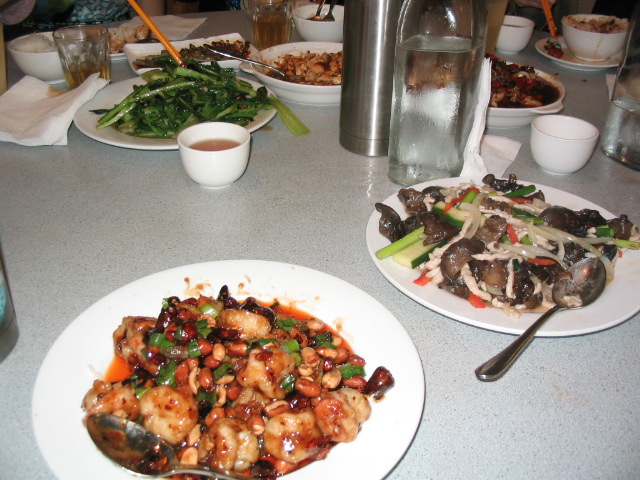
Possibly Sichuan’s most famous dish, Kung Pao appears to be the inspiration for most sauces labelled “Sichuan” in mainstream Chinese restaurants. The sauce was like an intense version of sweet and sour, again hitting in waves – salt, sweet, chilli - and coming with peanuts and fiery little red peppers. Meanwhile the beef combined an aromatic mixture of vegetables and spices, giving an almost flowery taste, with super-dry peppery meat. It was indescribably tasty – at least partly because it numbed the mouth to the point where descriptive words became hard to speak.


Even with these two strong contenders on the table, nothing, but nothing, could compare to the octopus. The only “3 chilli” dish we ordered, the spicy baby octopus was a unique experience. The octopus itself was well cooked and wonderfully tender, served in a sauce that seemed to contain every type of chilli known to man. There were dried chillis, fresh red chillis loaded into each octopus like firecrackers, bright orange chilli oil that could be seen separating from the sauce, in short more chilli than you could shake a chopstick at. Each mouthful provided a warming rush of earthy chilli flavour, followed by a 10 megaton explosion in your mouth. We salute the diner who went head to head with this dish.


After all this chilli, the pork threads with black fungus were a welcome relief. With a zero chilli rating, they relied on a more subtle but no less satisfying combination of flavours. The greens also provided some refreshing relief, though they were spicy enough in their own right. After a while it all became relative. Even the Ma Po Tofu began to seem mild, though in other contexts it would be a hot dish. A famous Sichuan specialty, it combined a warming bean-based chilli sauce with delicately textured bean curd. With or without pork mince, it made for perfect comfort food.


Overall

Wow. Not only was this by far the spiciest meal encountered on our journey, it also ranked among the best. As with Hunanese cuisine, the flavours, though strong, were well balanced and complex, coming together like a symphony. A symphony played at crashing volume, maybe, but still a symphony. It is something worth experiencing, though we recommend you have some milder dishes on the table as well to break the onslaught.


The meals were moderately priced - starting at $12 for a noodle dish, averaging around $18, higher for seafood - and the servings were extremely generous, making for excellent value. This was the first stop where we’ve asked for take-away bags, which were cheerfully provided. We could however, have done with more rice during the meal, as we needed it to cool our mouths down.

For chilli fans, this place is an absolute must. Convincingly Sichuanese, it also provides an insight into a side of Chinese cuisine you will not see in a generic Chinese takeaway. Although, after the chilli extravaganza we had last Saturday, we’re still wondering where the “dainty” part comes in.

Thursday, February 08, 2007

Next Stop: China (Part 5: Sichuan)


Sichuan (or Szechuan) cuisine, originating in Sichuan Province of southwestern China, has an international reputation for being hot and numbing due to the common ingredient Sichuan peppercorn, or Fagara. This is an indigenous plant whose peppercorns produce a fragrant, numbing, almost citrusy spice. Also common are chilli, ginger and spicy herbs. This emphasis on spice may derive from the region's warm, humid climate, where people need a good sweat and necessitates sophisticated food-preservation techniques which include pickling, salting, drying and smoking. Broad bean chili paste (doubanjiang) is also a staple seasoning in Sichuan cuisine.

Common preparation techniques in Sichuan cuisine include stir frying, steaming and braising, but a complete list would include more than 20 distinct techniques. Beef is somewhat more common in Sichuan cuisine than it is in other Chinese cuisines, perhaps due to the widespread use of oxen in the region. Stir-fried beef is often cooked until chewy, while steamed beef is sometimes coated with rice flour to produce a very rich gravy.

Some well-known Sichuan dishes include Kung Pao chicken (gongbao jiding) and Twice Cooked Pork (huiguorou). Although many dishes live up to their spicy reputation, often ignored are the large percentage of recipes that use little or no hot spices at all, including dishes such as Tea Smoked Duck (zhangcha ya). Other repesentative dishes include:

Mapo dofu – a combination of tofu (bean curd) and minced meat, usually pork, in a fiery spicy (hot) bean-based sauce
Sichuan hotpot (Sìchuan huoguo) – similar to other hotpots but with Sichuan pepper
Fuqi Feipian – thinly-sliced beef, beef lung/stomach/tongue, and a generous amount of spices, including Sichuan pepper – often served cold
Chongqing Spicy Deep-Fried Chicken (Chengdu laziji)
Shuizhu Dishes – “water-boiled” slices of meat (usually it is pork, beef, or fish), chili pepper, and a large amount of vegetable oil.

http://en.wikipedia.org/wiki/Szechuan_cuisine

Sunday, February 04, 2007

Meal #25 - China (Part 4: Hunan)

Known for its startling natural beauty, high quality tea and lotus flowers, the southern province of Hunan is also famous for having been the home of Mao Zedong. Not only is the Chairman celebrated in this bright café, but in the quest for great regional cuisine this meal was a Great Leap Forward!

Post Mao Café
Little Bourke St
Chinatown, City

The restaurants on Chinatown’s main drag can all start to blur into each other after a while but the Post Mao Café was a breath of fresh air. The Mao-themed décor was striking and original, without being garish or over the top. The menu promised the Chairman’s favourite dishes and we were impressed with the wide range of regional specialties on offer. This wasn’t a generic Chinese restaurant offering a few regional dishes; it was a distinctly Hunanese restaurant. The main menu was dedicated to Hunan cuisine, with an extra sheet listing more familiar (and slightly cheaper) Chinese (Cantonese) classics.

The Chairman was seen everywhere – in murals and paintings and old publicity photos, like one of Mao hoeing a field for the camera. Mao wasn’t the only celebrity honoured here though. Many of the Hunanese signature dishes were named after historical figures, encompassing everyone from 19th century marshals to famous courtesans. A popular name on the menu was “Chef Peng”, referring to Peng Chang Gui, a 20th century master chef who, ironically, was forced to flee his native Hunan when Mao’s revolutionaries took over, bringing his unique cuisine first to Taiwan and, later, New York.


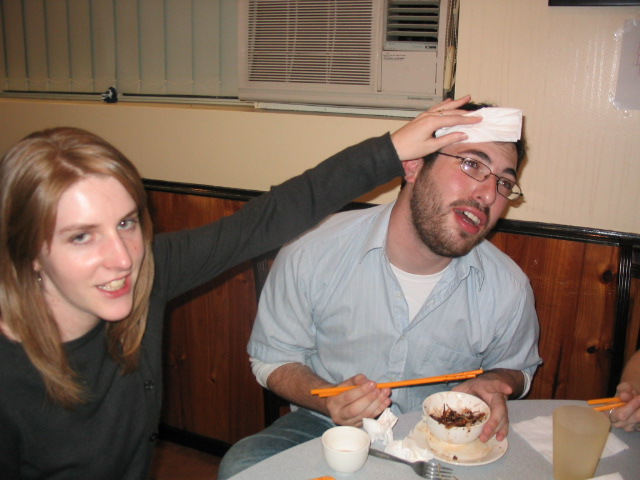
Even with a People’s Army of food critics descending on the café, including Nick, Naomi, Helen, Felicity, Dale, Kirsten, Ash, Sai, Caroline and Rami, we were spoiled for choice. After stuffing ourselves on the mounds of complimentary prawn crackers, we decided to forego entrees and share a Lazy Susan-load of mains among ourselves, mainly focusing on the Hunanese favourites. Some diners tried a unique entrée of their own creation – prawn crackers slathered with chilli sauce. Luckily, there was copious rice and Chinese tea for them to soothe their mouths with afterward.

Our waiter was a one-man dynamo, who did a remarkable job serving such a large group, while his boundless enthusiasm helped set a cheerful mood.

The Meal

Dong An Chicken – double-cooked sliced chicken with ginger, capsicum and pepper, “renowned family dish of Hunan nobility”

Chef Peng Lamb – lamb steak deep-, then stir-fried, with carrot, spring onion, garlic slices and black pepper

Chef Peng Beancurd - beancurd deep-, then stir-fried, with pork, red chilli, spring onion and blackbean sauce

Mao’s Braised Pork

Zuo Zong Tang Chicken – another Chef Peng classic named for a famous general, battered and stir-fried with dry chilli, with a well-balanced touch of spice, vinegar and sugar

Three Cup Duck - simmering in pot with a cup each of wine, vinegar and chilli oil

Spicy Calamari

Sizzling Mongolian Beef

The dishes showed masterful use of strong spices and bold flavours. Flavours which could easily overpower a dish – like the strong chilli in the chicken dishes or the vinegar in the Three Cup Duck – were kept in balance with other flavours, creating tastes that were both bold and complex. Even the fierce saltiness of the crispy skinned Calamari worked, with the salt, though powerful, simply one element in the dish’s construction.

A similar balancing act was used for the braised pork. While the dish used fatty cuts of meat, it was not greasy, and the rich brown sauce it came in had just a hint of sweetness. Mao loved this particular dish, apparently, describing it as his “tonic” and attributing it with brain nourishing properties. Certainly, all the pork-eating diners at our table raved about it too.

All the meat used was tender, a particular delight in the case of the duck. An interesting innovation, especially in the dishes attributed to Chef Peng, was the practice of both deep-frying and stir-frying the meat. This gave the meat a crispier texture but with less grease than would result from straight deep-frying.

In the case of the beancurd, the result was particularly pleasing, with the beancurd soaking through with the rich sauce while retaining perfect texture. The only beat our waiter missed was recommending the Chef Peng beancurd as a vegetarian dish, when it turned out to have pork in it, but you couldn’t fault him for urging us to try it, as it was very good. There were genuine vegetarian dishes offered in a separate section, so vegetarians need not be afraid of coming here.

We did have one dish off the regional specialty list. Sizzling Mongolian Beef is a Chinese classic not normally associated with Hunan, but one too good for some of our diners to resist. The cooks proved their versatility, preparing this familiar dish to perfection. It also had the most dramatic presentation, with a hot plate brought out and the meat added and stirred into a sizzling frenzy at the table.

The Verdict

We’re only twenty-five meals in and we don’t want to run out of superlatives too soon but this meal was excellent. Top marks for both taste and regional authenticity. There were many more dishes we would have liked to try – including claypots, egg dishes, the soups and the (genuine) vegetarian selection – and the Post Mao is a certain candidate for a return visit. Although the meals were slightly more expensive – averaging around $20 each – they had the quality to match. Mao Zedong and Chef Peng may have disagreed on politics, but they clearly both knew a thing or two about great food.

Footnote

After our great night at the Post Mao, we then decided to go out, as in “out” out at a club, braving dark alleyways, thumping music, clinical decor and over-priced drinks to go to the Croft Institute. What we were thinking? Clearly the brain nourishing properties of that braised pork take a while to kick in. Exploring the world of international cuisine is so much more fun.

Friday, February 02, 2007

Next Stop: China (Part 4: Southern China - Guangdong/Cantonese, Hunan)


There is a Cantonese saying: "Any animal whose back faces the sun can be eaten". Cantonese cuisine takes this quite literally, embracing almost all edible meats. In addition to standard staple meats (pork, beef and chicken), snakes, snails, insects, worms, chicken feet, duck tongues, and entrails may be found at a traditional Cantonese table.

Cantonese (Yue) cuisine originates from Guangdong Province in southern China, more precisely, the area around Canton. Of the various regional styles of Chinese cuisine, Cantonese is the best-known outside of China. A "Chinese restaurant" in a Western country will usually serve Cantonese food, or an adaptation thereof.

Steaming, stir frying and deep frying are the most popular cooking methods in Cantonese restaurants, adhering to the philosophy of bringing out the flavor of the freshest ingredients. Cantonese cuisine is sometimes considered bland by those used to thicker, richer and darker sauces of other Chinese cuisines. It can be characterized by the use of very mild and simple spices in combination. Garlic is used heavily, especially in dishes containing ingredients of unpleasant odors, such as entrails. Spicy hot dishes are extremely rare in Cantonese cuisine. As a rule of thumb in Cantonese dining, the spiciness of a dish is usually inversely proportional to the freshness of the ingredients.

Fresh live seafood is a specialty in Cantonese cuisine. Many authentic restaurants maintain live seafood tanks. Cantonese seafood is best cooked by steaming, with a light seasoning of soy sauce, ginger, or spring onion added in order to bring out the natural sweetness of the seafood.

A unique Cantonese specialty is the slow-cooked soup, usually a clear broth prepared by simmering meat and other ingredients for several hours. Traditional Cantonese families have this type of soup at least once a week. The combinations are varied and numerous. The ingredients of a rather expensive Cantonese slow cooked soup may include whole chicken, dried cod gas bladders, dried sea cucumbers, dried scallops, and Bao Yu (dried abalone). A more affordable example could include pork bones, watercress and apricot kernels. The main attraction is the liquid in the pot, although the solids are eaten too, sometimes with soy sauce.

Hunan cuisine (sometimes called Xiang cuisine) is one of the eight regional cuisines of China and is well known for its hot spicy flavor, fresh aroma and deep color. Common cooking techniques include stewing, frying, pot-roasting, braising, and smoking. Hunan is known for its liberal use of chilli peppers, shallots and garlic. Other distinguishing characteristics of Hunan cuisine include a focus on smoked and curing food in its dishes.

The Hunan menu will change following the season's alternation. In a hot and humid summer, a meal will usually start with cold dishes or a platter holding a selection of cold meats with chillies for opening the pores and keep cool in the summer. In winter, a popular choice is the hot pot, for heating the blood in the cold months. A special hot pot, the "lover's" hot pot, is famous for splitting the pot into a spicy and a lighter side.

Sources: http://en.wikipedia.org/wiki/Cantonese_cuisine
http://en.wikipedia.org/wiki/Hunan_cuisine

Thursday, February 01, 2007

Meal # 24: China (Part 3: Hakka Cuisine)

The Hakka people have produced many influential thinkers and politicians, including economic reformer and uncle of Chinese socialism Deng Xiaopeng; nonetheless this meal was nothing revolutionary.


Hakka Seafood Village
Victoria St., Richmond
Open 7 days

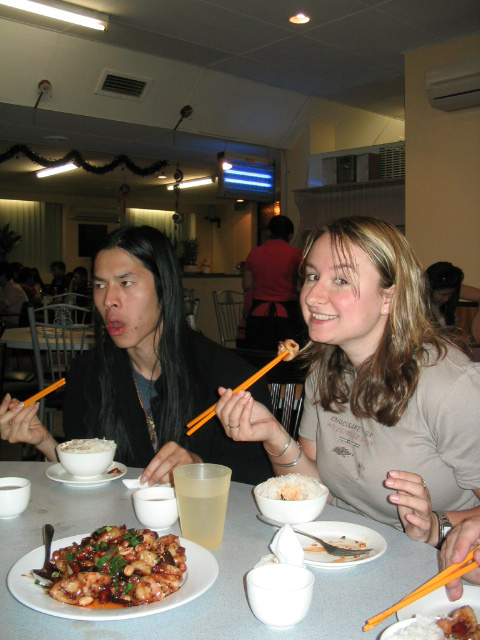
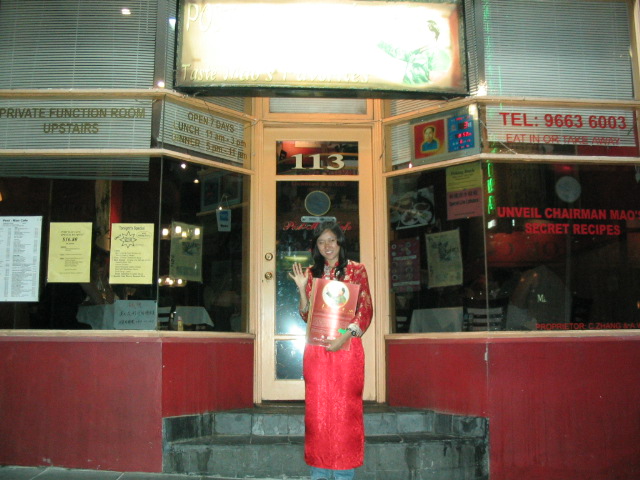
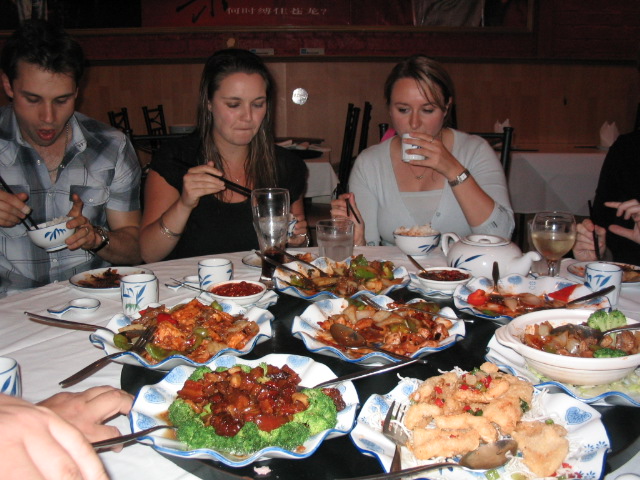
Hakka Seafood Village is a noisy restaurant on the Victoria Road strip that seems to draw a steady stream of diners. With understated décor, brisk staff and frequently refilled Chinese tea, the “Seafood Village” seemed like a good casual setting. A shame about the acoustics in there, which at times made conversation difficult. We added to the din on Saturday with our high spirited team of Marty, Rami, Caroline, Paul, Deb and Nick. We also welcomed our travelling correspondent Naomi back from New Zealand, where she was trying out “haka” cuisine. Yeah okay, enough attempts at humour, back to the review.


The menu had a comprehensive selection of Chinese dishes, including atypical offerings like pigeon, venison, crocodile and kangaroo. We eschewed these however to seek out the traditional Hakka specialties, which had their own page in the menu. While the list of specifically Hakka dishes was not long (and shorter once we cut out everything involving pig intestines) there was plenty to go around when the dishes came out, with generous servings and plenty of rice.

The meal

Entrée

Seafood san choi bow
Vegetarian san choi bow
Pan fried dumplings


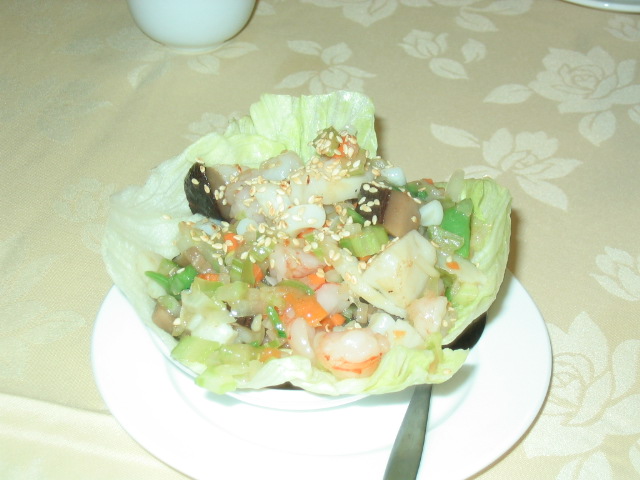
San choi bow is a famous Chinese entrée, essentially comprising a stuffed lettuce leaf. The leaf serves as a small edible bowl for a stuffing of diced vegetables and spices, sometimes with pork or seafood. The san choi bow at Hakka Village were decent, with a chunkier stuffing and more heavy garlic flavour than those our diners have encountered before. The dumplings too were quite good, although we could tell we’d left Shanghai because it was back to standard entrée-size servings of four dumplings per order.


Main courses
(* indicates a dish denoted as a Hakka specialty)

* Steamed fish fillet served with mustard green and black mushroom, on a bed of tofu.
* Stuffed bean curd with ginger and shallot.
* Salted duck with taro in claypot
Deep fried squid with chilli sauce and pepper
Bean curd, BBQ pork and vegetables.

On the whole, the fish was probably the most popular of the mains, followed by the squid. The black mushrooms served with the fish had an earthy flavour similar to shiitakes, meshing well with the sharp pickle flavour of the mustard greens. The chilli squid was a little salty but still enjoyable. Firm textures seemed to be the order of the day – with both the fish and the squid firmer than you’d expect.

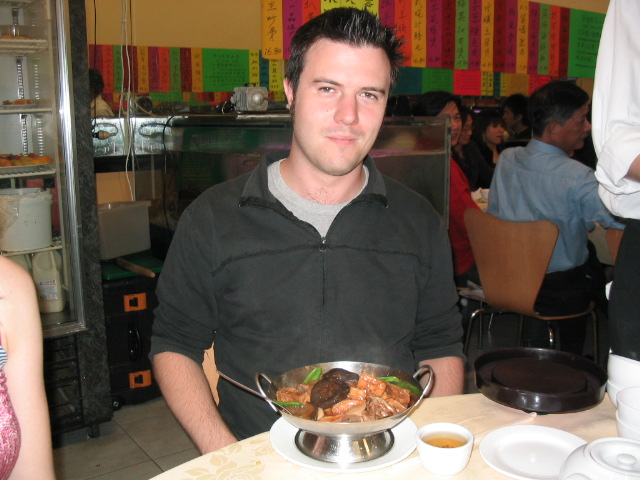
The bean curd at least was soft and came filled with a pork-based stuffing and served with shreds of ham. Enjoyable enough, although it was, again, a bit salty. The BBQ pork dish was of similar standard – reasonable but not brilliant. The duck however was a let down. Of course we were expecting it to be salty, being salty duck and all, but the meat was also quite tough, unusual for a claypot dish, and full of bones.


The verdict

No prizes for guessing that saltiness was a common theme! This seemed to be a trend across the menu, with several dishes featuring salty fish or salty egg sauce, and is in line with what we’d read about Hakka cuisine and its origins in cooking with preserved meats. Sauces as a rule tended to favour sharp dominant flavours, like garlic or ginger.

On the whole, the meal was okay but not super. It was moderately priced, between $13 and $20 a head. It’s not bad but don’t go there looking for something out of the ordinary. Unless you want to try stir-fried crocodile that is…

Wednesday, January 24, 2007

Next Stop: China (Part 3: Hakka Cuisine)

The Hakka are a subgroup of the Han Chinese people who live predominantly in the provinces of Guangdong, Jiangxi, and Fujian in southern China. There are also large Hakka communities in Taiwan and Hong Kong. Their ancestors are said to have originated in the Henan and Shanxi provinces of northern China over 1,700 years ago. The Hakka have had a significant influence on the course of Chinese and Overseas Chinese history: in particular, they have been a source of revolutionary and political leaders.

For more detail about the Hakka, their history and culture go to:
http://en.wikipedia.org/wiki/Hakka

The Hakka people have a unique cuisine and style of Chinese cooking which is little known outside the Hakka home. Hakka cuisine concentrates on the texture of food - the hallmark of Hakka cuisine. The food tastes very natural as there is very little seasoning and no artificial flavoring added to it. Hakka cuisine from mainland China is spicy but Taiwan's Hakka cuisine is salty, sweet and sour. Conversely, the Hakka who settled Hong Kong place great emphasis on seafood cuisine. Hakka cuisine in Hong Kong is dominated by an abundance of vegetables, and is garnished lightly with sparse or little flavouring.

The Hakka people were traditionally poor and often transient. Their humble, migratory lifestyle is reflected in their cuisine. Due to their thrifty nature, most meats are preserved. After preservation, be it sun-dried or salted, it can be kept for about one year. The preservation methods prevent spoilage. Whereas preserved meats feature in Hakka delicacy, stewed, braised, roast meats, ‘texturized’ contributions to the Hakka palate have a central place in their repertoire.

One popular Hakka dish is Xiao Feng, which consists of three-layered pork. The pork is cut into many small pieces for the dish and is then cooked with preserved bamboo shoots, which again developed out of thriftiness. The Xiao Feng then needs only Hakka seasoning—onion, garlic, soya sauce and wine—and it will be fragrant and tasty.

One of the signature dishes of the Hakka is stir fry, which can be kept and eaten for quite a number of days. The more it is fried the more delicious it becomes. The Hakka also use cuttlefish, and some people add dried tofu or various other ingredients.

Information from:
http://en.wikipedia.org/wiki/Hakka#Cuisine
http://en.epochtimes.com/news/6-9-24/46304.html

Tuesday, January 23, 2007

Meal #23 - China (Part 2: Shanghai)

Ahhh. Shanghai, gateway to China! Home of dumplings! We certainly didn’t need to be “shanghai’ed” into this meal.

Shanghai Noodle House
Tattersalls Lane, Chinatown
Melbourne City

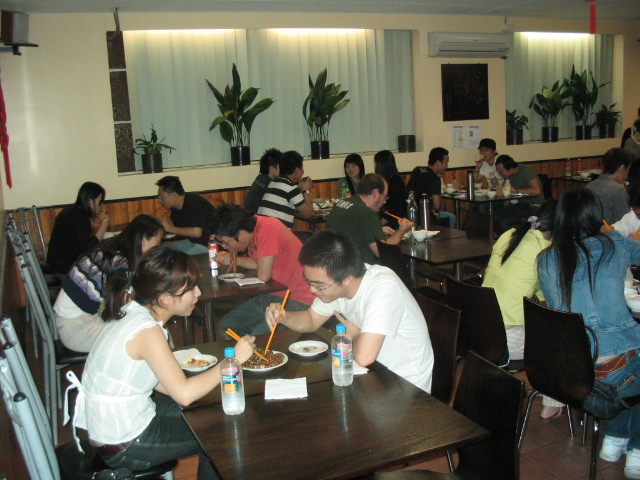
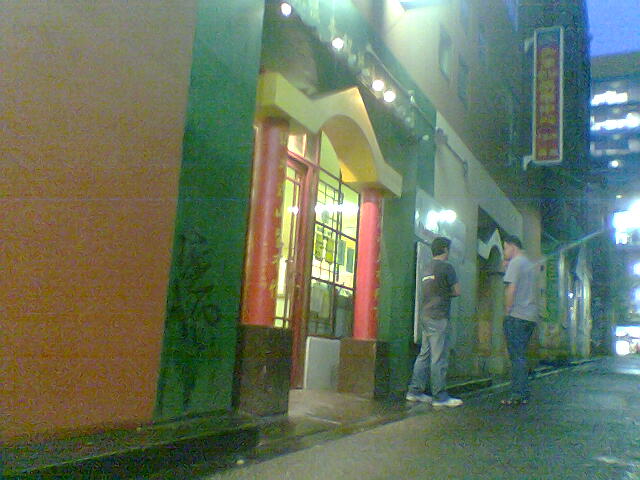
Tattersall’s Lane may have a seedy feel to it, and more reminiscent of the old Shanghai of opium dens and sailors’ dives than the thriving super-modern city Shanghai is today, but this did not put off our diners. Nothing puts off our diners! Not even torrential rain, as Dom, Rami, Caroline, Nick, Sai, Paul and Deb proved this Saturday, braving hostile elements to seek out this tiny Chinatown café.

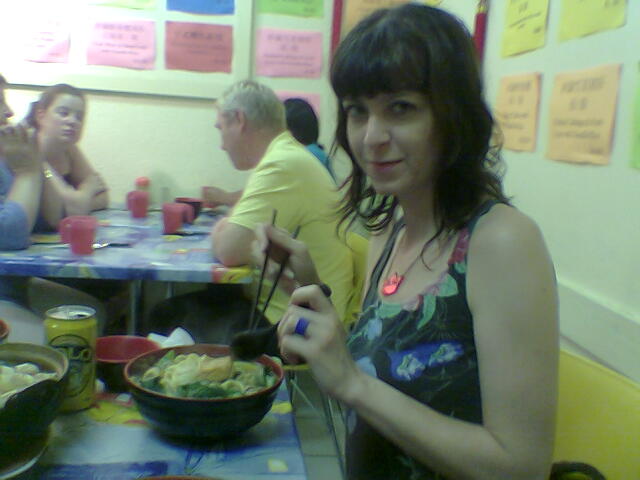
Simple plastic tables, paper menus on the walls, tea in a steaming urn with plastic cups and a drinks fridge in the dining area made for a casual atmosphere where the emphasis was clearly on the food. Hey, they could have had a barn with straw on the floor for all we cared, it was DRY. Our dampened spirits were soon restored though, as Shanghai-style cuisine easily fits the category of “comfort food”. There are lots of soups and hot dumplings and the Chinese equivalent of stew, the claypot. With the sounds and smells of the busy kitchen wafting into the room and the brisk staff dashing to and fro, we stuck in with gusto.

The Meal

Entree:

Vegetarian Buns
Steamed Spring Onion Buns
Fried Beef Dumplings


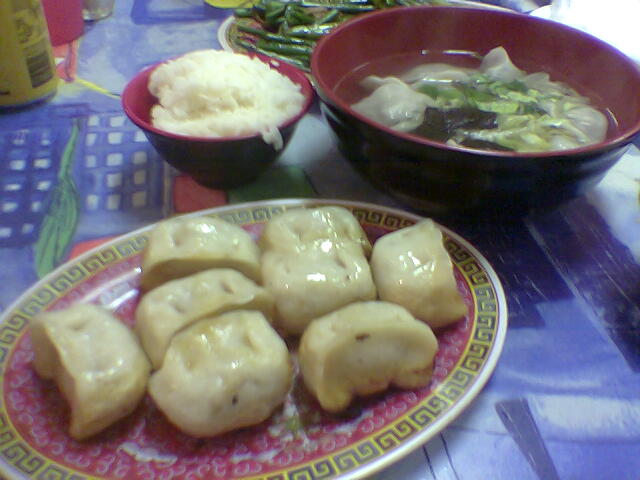
Large steamed buns packed with delicious vegetable fillings. Mounds of hot dumplings. A great way to start the meal.


Soups:

Vegetarian Dumplings in Soup
Pickled Radish, Sliced Pork and Egg Soup
Wonton Soup
Shanghai Vegetarian Noodle Soup
(main)


The range of soups was quite varied, with pages of noodle soups on offer, soups containing everything from bean curd and mushroom to mixed seafood to pork stomach. We tried the vegetarian one, which was good, although the huge bowl was too much for just one diner. Then there were the dumpling and wonton soups – continuing the trend of excellent dumplings begun with the entrees. The smaller entrée soups come in an interesting selection of flavours, many pork-based. We tried one that had shreds of egg stirred through it, its delicate flavour in counterpoint to the sharpness of pickled radish.

Mains:

Spicy Garlic Sprouts with Sliced Chicken
Sliced Chicken and Fried Rice Cake
Garlic Spouts with Clam Meat on Rice
Stir Fried Egg and Leek
Leek, Sliced Pork, Noodle Claypot


The stir fries, which tended to be based on a few key ingredients and relatively light on meat, were flavoursome and filling. Garlic sprouts, which featured in two of our dishes, look a bit like green onions and taste like garlic, only even more garlicky. The spicy sprouts with chicken packed a punch but were definitely popular. They were also a good accompaniment for clams, which appear to be the favourite fruit of the sea at the Noodle House.


The stir fried egg and leek was a classic Chinese omelette – a simple dish but great. Less familiar was the fried rice cake. This came in thin slices and has a soft, slightly chewy consistency. The taste relies heavily on the other ingredients and the sauces that it comes with. The sliced chicken made for a relatively mild flavour but there were stronger flavours, like chilli chicken and pork and spinach, on the menu as well.

Claypot was big on the menu, with almost as many claypot dishes on offer as there were noodle soups. These came served in the pot they were cooked in with rice or noodles. Cooking in the claypot retains moisture and heightens flavours - one diner who is already a Noodle House fan reported that the seafood claypots can be overpoweringly “oceany”. The pork claypot we tried on Saturday came with leek, beancurd, mushrooms and other goodies and made a hearty meal.


The Verdict

There was a wide range of menu options – with vegetarians even being offered a “stir-fried greengrocery” – and everything we had was good. The low price (entrees between $4 and $6 and mains around $8 - $10), belied the serving sizes, which were huge. Most of the flavours were based on simple combinations, which combined with the large serving sizes could lead to some dishes becoming monotonous for a single diner. It’s probably best to share mains, rather than order individual dishes as we did. While the basic décor and unromantic laneway location might scare away the fine diners, this place is really very good. We’d go again; we’d even get rained on again to get there!


PS - after 3 photos our camera ran out of memory, then before we could delete anything, the battery died. Thank God for the ever trusty, back-up mobile phone camera!