Meal #10 – Myanmar (Burma)
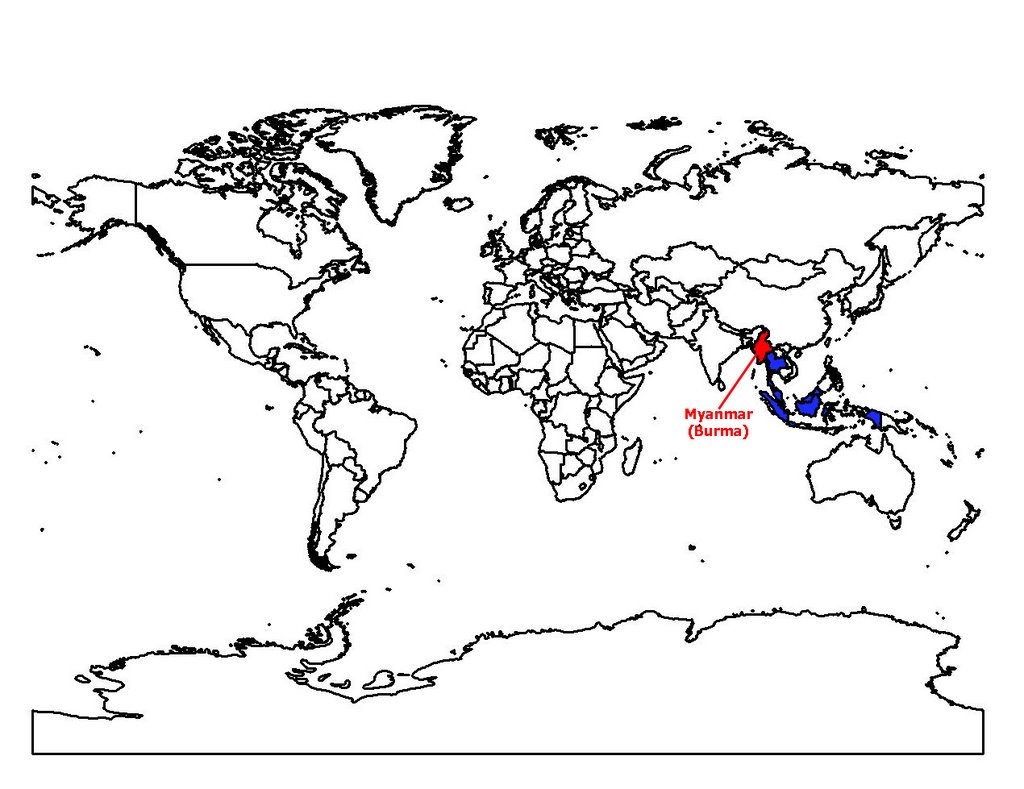
This week we tried the national cuisine of Myanmar (formerly known as Burma) – which was definitely worth leaving the house for...unless you’re Aung San Suu Kyi that is…
This week we tried the national cuisine of Myanmar (formerly known as Burma) – which was definitely worth leaving the house for...unless you’re Aung San Suu Kyi that is…
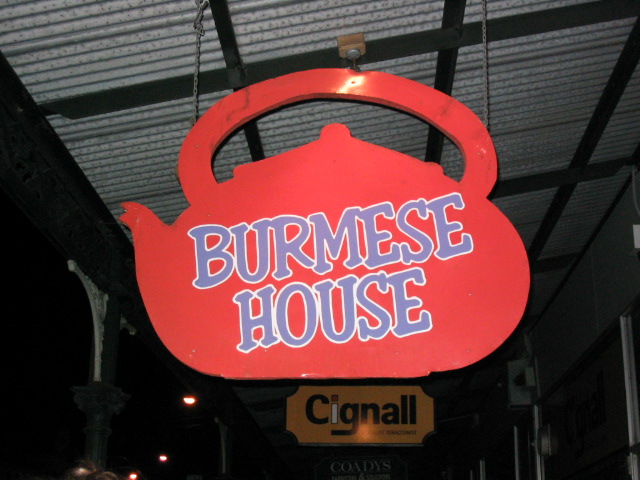
Burmese House
Authentic Burmese Cuisine
303 Bridge Rd. Richmond
Lunch: Wed to Fri (11:30 to 2:30)
Dinner: Mon to Sun (5:30 to 10:00)
BYO Wine Only (Fully licensed)

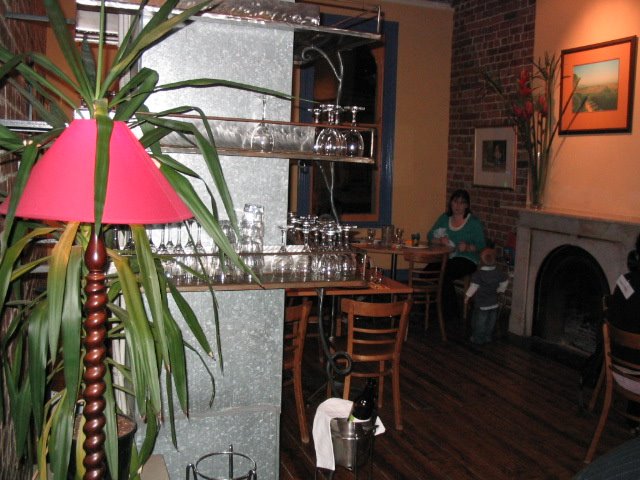
Burmese House is a stylish multi-leveled eatery found in the heart of the Richmond food district, and one of only a handful of Melbourne restaurants that serves Burmese cuisine. The décor was inoffensive, focusing on brick and “untreated” wood, with similarly tame decorations. The open kitchen is located near the front door, inviting you in with the smells and sounds of lively cooking. Dining is predominantly located on a split upper level, affording a little more privacy than a single large room. Although the décor aimed for Western tastes, we hoped the food would not.
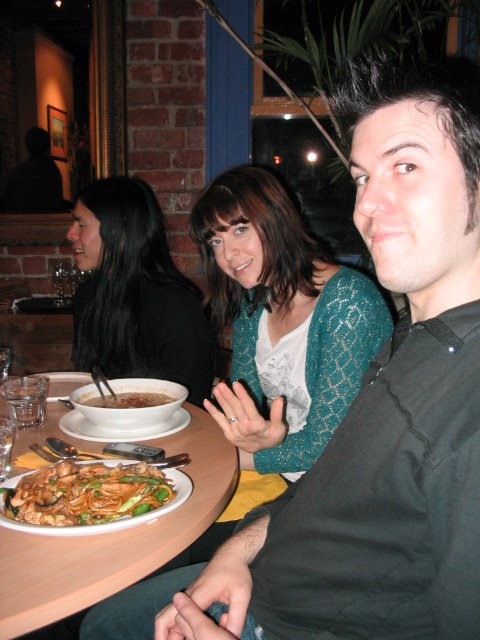
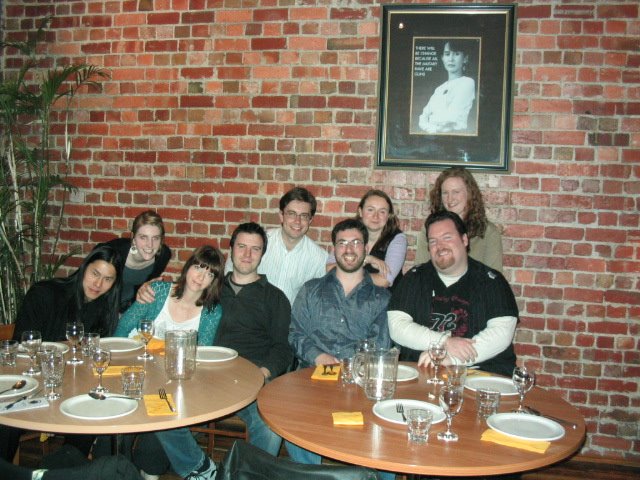 This week’s diners were (in age order) Naomi, Dom, Paul, Rami, Caroline, Helen, Phil, Deb and Vient (not so) Young (Sai). This meant that kosher, celiac and vegaquarian food restrictions applied.
Appetisers:
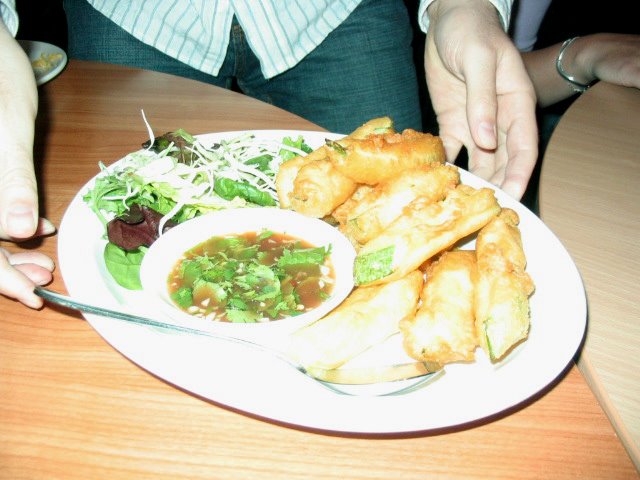
Marrow (Long Melon) Fritter served with a dipping tamarind sauce
Deep Fried Chickpea served with a dipping tamarind sauce
Roti Bread with dipping chickpea sauce
Mains:
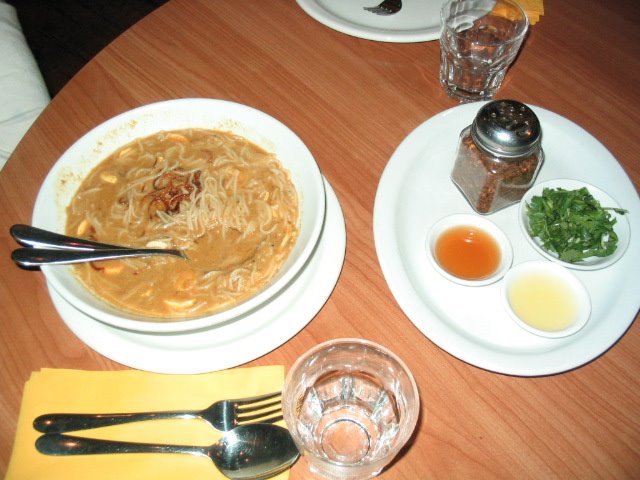
Moh Hin Gha (The National Dish of Burma) – Rice vermicelli noodle in fish soup
Madalay Mout-Te – Egg noodle cooked with Burmese chilli paste, chicken, chickpea powder and lemon juice
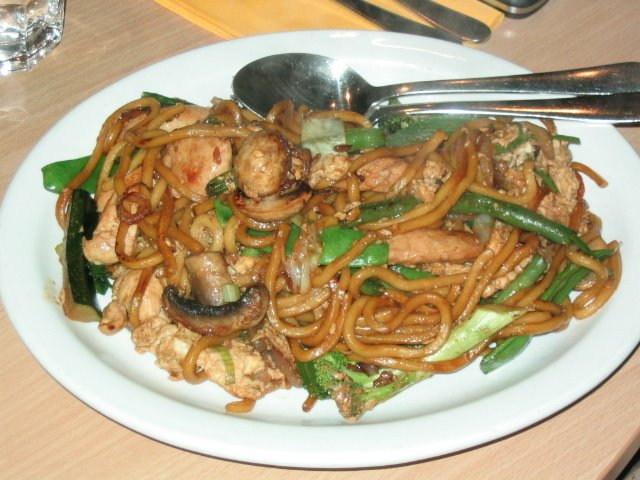
Rangoon Noodle (Yangon Kauk Swe) – Stir-fried egg noodle together with chicken, egg and vegetables
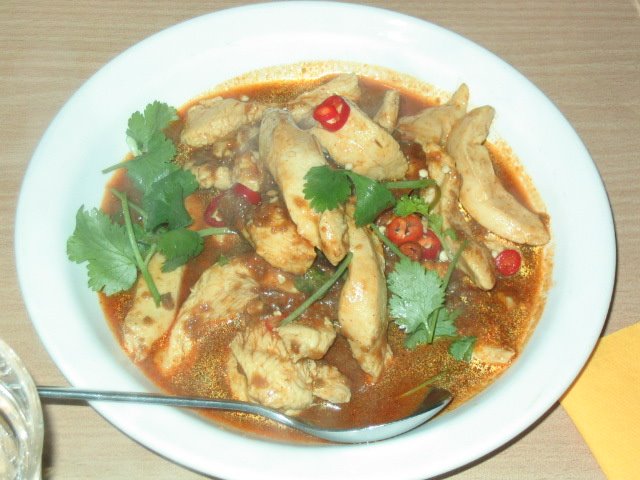
Tamarind Chicken Curry
Grilled Beef Salad
Rakhine Sliced Fillet of Fish Curry (This recipe originated from the West coast of Rakhine state. It’s [sic] flavour is medium hot and sour.)
Appetisers:
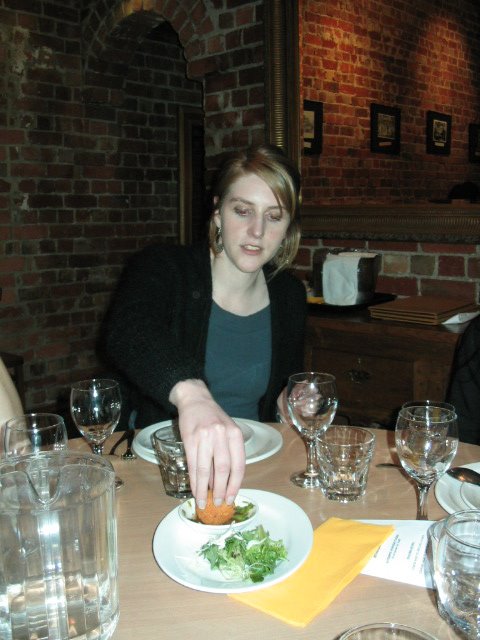
This week’s entrée was brought to you by the vegetable chickpea. The chickpea dipping sauce was sharp and surprisingly flavoursome, and went well with the roti bread (our usual favourite). The deep fried chickpeas were, well, oriental falafels basically, but the tamarind sauce lent them a morish element.
The marrow fritters were an example of how to batter and fry vegetables well. The light batter meant that the flavour of the marrow was not lost, and the fritters were well complimented by the tamarind sauce.
Mains:
There was something fishy about the national dish of Burma (Moh Hin Gha); the description “Rice vermicelli noodles in fish soup’ was surprisingly literal. The meal consisted precisely of rice noodles in a broth of pretty much every fishy flavour you can imagine. Fish was definitely intended as a plural.
Having traveled rice heavy areas in past weeks, noodles were popularly ordered. The Rangoon Noodle (Yangon Kauk Swe) was described as a Burmese version of Pad Thai, distinguishable through its abundant use of oyster sauce. The Madalay Mout-Te would have been preferable as a side dish; as a main, the overpowering lemon juice downplayed the chilli and chickpea, preventing the traditional Burmese interplay of hot and sour flavours. The Rakhine sliced fillet of fish curry was also purported to consist of hot and sour flavours, but was disappointingly mild. The recommended side of coconut rice overpowered the subtleties of the dish, which was far more successful with steamed rice.
The two standout dishes were the grilled beef salad and the tamarind chicken curry. The beef was served rare and tender, with a liberal sprinkling of chilli, and accompanied by a salad of tomatoes, onions and random leaves. The chicken curry was particularly good with the coconut rice, which tempered the chillis and allowed the flavour of the tamarind to feature more prominently.
Overall:
Burmese House is a restaurant typical of the area: oriental food with a comfortable and pleasant atmosphere. Unfortunately some dishes inclined toward Western palates. It might be best to share the noodle dishes; they were not varied enough to satisfy as a single meal. The curries and salad dishes seem to be the most impressive dishes here, and are available in your preference of heat. The staff was accommodating, able to adapt to our fluctuating table numbers. They were willing to rearrange tables, and were able to make suggestions on complementary dishes. Burmese House was inconsistent in the quality of its offerings, but at less than $20 a head, a good meal can be had with discerning ordering.